If you are searching for the sus meaning Among Us origin story, the short answer is simple: sus means “suspicious” or “suspect.” In Among Us, players use it when they think another player may be the Impostor.
- What Does Sus Mean?
- What Does Sus Mean in Among Us?
- Did Among Us Invent the Word Sus?
- The Origin Story of Sus
- Sus as a Shortened Form
- Sus Before Gaming Culture
- How Among Us Changed the Meaning of Sus
- When Did Sus Become Popular?
- The “Pretty Sus” Connection
- Sus in Internet Slang
- Is Sus Rude or Offensive?
- Sus in Texting and Social Media
- Sus in Gaming
- Sus vs. Suspicious
- Common Misunderstanding About the Sus Origin
- Why Did Sus Become So Popular?
- Sus Meaning Among Us: A Simple Example
- Related Slang Terms
- Frequently Asked Questions
- What does sus mean in Among Us?
- Did Among Us invent sus?
- What is sus short for?
- What does “pretty sus” mean?
- Is sus a bad word?
- Why is sus associated with Among Us?
- Sus Meaning Among Us Origin Story and How the Slang Is Used
- Sus Meaning Among Us Origin Story Explained Simply
- Why Is Sus Associated With Among Us?
- How People Use Sus Today
- Sus in Texting and Online Chats
- Is Sus Always Related to Among Us?
- Sus vs. Suspicious
- What Does “Pretty Sus” Mean?
- Is Sus Rude or Offensive?
- Similar Words to Sus
- Common Misunderstanding About the Sus Origin
- How Sus Became Popular Through Among Us
- What Does Sus Mean in Everyday Conversation?
- Sus Examples in Texting
- Sus in Social and Online Conversations
- Is Sus the Same as Suspicious?
- Can Sus Be Used as a Joke?
- What Does Sussy Mean?
- Does Sus Mean Impostor?
- Why Is Sus So Short?
- Is Sus Appropriate in Formal English?
- Common Mistakes About the Origin of Sus
- Sus Meaning Among Us Origin Story in One Example
- Final Thoughts
But Among Us did not invent the word. The slang term existed long before the game became popular. Among Us helped turn it into one of the most recognizable pieces of modern gaming and internet slang.more information:-slaps meaning music slang explained or vicious meaning .
What Does Sus Mean?
Sus is an informal shortening of suspicious or suspect. It describes a person, action, explanation, or situation that seems questionable, shady, or untrustworthy.
For example:
- “Why did you leave the room so quickly? That’s sus.”
- “His story sounds pretty sus.”
- “Red was standing next to the vent. Red is sus.”
- “That website looks sus, so I wouldn’t enter my details.”
The word is usually casual and often humorous. Calling someone “sus” does not necessarily mean you seriously believe they have done something wrong.
What Does Sus Mean in Among Us?
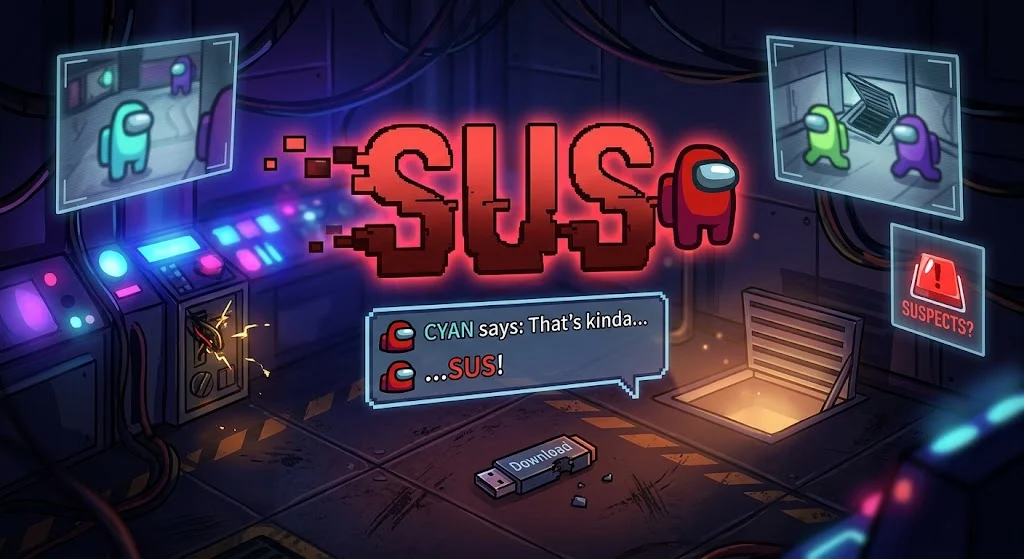
In Among Us, sus became closely associated with accusing a player of possibly being the Impostor.
The game, developed by Innersloth, was released in 2018. Players take the role of Crewmates completing tasks while one or more Impostors secretly try to eliminate them. Because players must identify suspicious behavior, sus became a convenient way to describe someone who seemed likely to be the Impostor.
Instead of saying:
“I think Blue might be the Impostor because Blue was acting suspiciously.”
a player could simply say:
“Blue is sus.”
That short phrase worked especially well in the game’s fast-paced discussions.
Did Among Us Invent the Word Sus?
No. This is one of the biggest misunderstandings about the word.
The slang sus predates Among Us by decades. Merriam-Webster explains that historical examples of sus exist well before the game, with evidence for several older uses. Its dictionary entry gives 1955 as the first known use of the modern adjective sense meaning “suspicious” or “suspect.”
Other historical slang references trace forms of sus even earlier. Green’s Dictionary of Slang records noun uses from the 1930s and adjectival uses dating back to the early 20th century. The exact dates vary depending on which sense and spelling are being documented.
So the more accurate statement is:
Among Us popularized sus; it did not create sus.
The Origin Story of Sus
The word has a longer history than many gamers realize.
Sus as a Shortened Form
Modern sus is generally understood as a shortened form related to suspect and suspicious. Collins Dictionary lists sus as British slang for “suspicion,” “a suspect,” or “suspicious,” and describes its origin as a 20th-century shortening related to suspicion.
The related form suss also developed as an informal word. Expressions such as “suss it out” or “suss out the situation” mean to investigate, figure something out, or understand what is happening. Merriam-Webster connects this form with suspect.
Sus Before Gaming Culture
Before Among Us, sus appeared in different forms of British, American, Australian, and internet slang.
It was not always used exactly as modern gamers use it. Historical records show that the word could refer to a suspicion or a suspected person, while the adjective could describe something suspicious.
This is important because it shows that the gaming meaning developed from an older slang pattern rather than appearing from nowhere.
How Among Us Changed the Meaning of Sus
Among Us gave the old slang word a highly specific setting.
The game’s central mystery revolves around identifying an Impostor. Players naturally needed a quick way to point out behavior that seemed suspicious. Sus was almost perfect for that purpose because it was short, easy to type, and easy to say during a discussion.
Although Among Us launched in 2018, its popularity exploded in 2020. During that period, the word became strongly associated with the game and its memes.
This created a new cultural association:
sus → suspicious → possible Impostor → Among Us
That association became so strong that people who had never played the game could still recognize the word.
When Did Sus Become Popular?
The word itself is older, but its huge modern internet popularity is closely connected to the 2020 explosion of Among Us.
Know Your Meme notes that as Among Us experienced a major wave of popularity around August 2020, sus became a common expression in game chats for identifying suspected Impostors.
Dictionary.com similarly notes that the phrase “pretty sus” spread widely as a meme in 2020 alongside Among Us.
The timing is important: 2020 was not the birth of sus; it was the moment when the word became much more visible to mainstream internet users.
The “Pretty Sus” Connection
One popular form is:
“That’s pretty sus.”
It means:
“That seems very suspicious.”
The phrase became strongly associated with Among Us memes, but pretty sus was not necessarily created by the game. Dictionary.com documents examples of sus being used online before Among Us became popular.
Today, someone can say “pretty sus” even when they are not talking about gaming.
For example:
- “He suddenly bought three identical phones. Pretty sus.”
- “The email asked for my password. Pretty sus.”
- “She says she didn’t eat the cake, but there are crumbs everywhere. Pretty sus.”
Sus in Internet Slang
Outside Among Us, sus has a broader meaning.
It can describe anything that seems:
- suspicious
- questionable
- shady
- sketchy
- untrustworthy
- strange
- potentially dishonest
The exact meaning depends on context.
For example, if someone says:
“That deal sounds sus.”
they probably mean the deal seems questionable.
If someone says:
“You’re sus.”
they may be jokingly suggesting that the person is behaving suspiciously.
Is Sus Rude or Offensive?
Usually, sus is not an offensive word.
It is casual slang and is frequently used humorously. However, context matters. Calling someone “sus” in a serious conversation can suggest that you think the person is dishonest, suspicious, or untrustworthy.
In professional writing, it is generally better to use words such as suspicious, questionable, or concerning.
Compare:
- Casual: “That explanation is sus.”
- Neutral: “That explanation seems questionable.”
- Professional: “That explanation raises some concerns.”
Sus in Texting and Social Media
In texting, sus is useful because it communicates an idea quickly.
Someone might text:
“Why is he deleting all his messages? Sus.”
Or:
“This link looks sus. Don’t click it.”
The word can also be used as a joke:
“You said you were going to sleep at 10, but you’re still online. Sus.”
Its internet popularity means that people often use it without any connection to Among Us.
Sus in Gaming
Gaming is where sus became especially famous.
In Among Us, a player might be considered sus because they:
- were near a reported elimination
- gave an unusual explanation
- were seen near a vent
- changed their story
- accused another player too quickly
- behaved differently from the rest of the crew
However, sus does not automatically mean guilty.
A player can be “sus” simply because their behavior raises suspicion.
For example:
“I don’t know if Green is the Impostor, but Green is definitely sus.”
That distinction is important: sus means suspicious, not proven guilty.
Sus vs. Suspicious
These words have essentially the same core idea, but their tone is different.
| Word | Meaning | Tone |
|---|---|---|
| Sus | Suspicious or questionable | Casual, slang |
| Suspicious | Making you think something is wrong | Neutral |
| Shady | Appearing dishonest or questionable | Informal |
| Sketchy | Untrustworthy or potentially dangerous | Informal |
| Questionable | Not completely convincing or acceptable | Neutral/formal |
Sus is best suited to casual conversation, texting, gaming, and internet culture.
Common Misunderstanding About the Sus Origin
A common misconception is that the creators of Among Us invented sus as a new gaming term.
They did not.
The word existed before Among Us, and historical evidence shows that forms of sus had already been used in English slang. Among Us gave the term an enormous new audience and connected it strongly with the idea of identifying an Impostor.
Another important point is that there is no single, universally agreed-upon “first sus meme” that proves the word itself began with Among Us. The slang and the game-specific meme history are two different stories.
Why Did Sus Become So Popular?
The success of sus is partly about convenience.
It is:
- short
- easy to pronounce
- easy to type
- expressive
- flexible
- naturally humorous
It also fit perfectly into Among Us because players had only a limited amount of time to discuss who might be the Impostor.
The game therefore gave an existing slang word a memorable new identity.
Sus Meaning Among Us: A Simple Example
Imagine five players are discussing a round:
Alex: “Where were you?”
Sam: “I was in Electrical.”
Alex: “I saw you near the body.”
Sam: “I was doing a task!”
Alex: “Hmm… sus.”
Here, sus means:
“Your behavior seems suspicious, so I think you might be the Impostor.”
The accusation can be serious within the game, but players often use the word jokingly.
Related Slang Terms
If you understand sus, you may also encounter these related expressions:
Sussy — a playful variation of sus, meaning suspicious.
Sketchy — something that seems unsafe, dishonest, or questionable.
Shady — suggesting dishonest or questionable behavior.
Fishy — something that seems suspicious or unlikely to be genuine.
Impostor — in Among Us, the hidden player whose goal is to eliminate Crewmates.
Vent — an important Among Us gameplay feature that became associated with suspected Impostor behavior.
Frequently Asked Questions
What does sus mean in Among Us?
In Among Us, sus means suspicious or suspect. Players use it when they think someone may be the Impostor.
Did Among Us invent sus?
No. Sus existed before Among Us. The game popularized the word on a massive scale, especially during its 2020 surge in popularity.
What is sus short for?
Sus is commonly understood as a shortened form of suspicious or suspect. Historical usage includes related meanings and forms, so the exact historical pathway is more complicated than simply saying it was invented as a gaming abbreviation.
What does “pretty sus” mean?
“Pretty sus” means quite suspicious or very questionable. The phrase became strongly associated with Among Us memes in 2020.
Is sus a bad word?
No. Sus is generally harmless slang, although calling someone sus can imply that you distrust or suspect them. In formal situations, “suspicious” is usually more appropriate.
Why is sus associated with Among Us?
Among Us revolves around identifying a hidden Impostor, so players frequently needed to describe suspicious behavior. The existing word sus fit that situation naturally and became strongly associated with the game during its 2020 popularity boom.
Sus Meaning Among Us Origin Story and How the Slang Is Used
If you are researching the sus meaning among us origin story, it helps to separate the older slang meaning from the way the word became connected with the game. Sus is an informal shortening of “suspicious” or “suspect.” In everyday internet language, it describes something that seems strange, questionable, dishonest, or untrustworthy.
In Among Us, the word gained a much more recognizable gaming context. Players use “sus” when another player behaves in a way that makes them think that person could be the Impostor.
Sus Meaning Among Us Origin Story Explained Simply
The sus meaning among us origin story begins with a word that was already being used before Among Us became popular. The game did not create the slang term from nothing. Instead, Among Us gave an existing expression a new and highly recognizable place in online culture.
Before the game became a major internet phenomenon, “sus” was already used as casual slang for “suspicious.” Among Us made the expression especially useful because players constantly needed to decide who was acting suspiciously.
For example:
“Blue is acting sus.”
This means:
“Blue is behaving suspiciously, so I think Blue might be the Impostor.”
Why Is Sus Associated With Among Us?
The sus meaning among us origin story became especially interesting because of the game’s central gameplay mechanic. In Among Us, Crewmates complete tasks while trying to identify the hidden Impostor.
Players often have only a few seconds to explain why they distrust another player. Saying “sus” is much faster than saying “I think that player is behaving suspiciously.”
This made the word perfect for:
- In-game discussions
- Text chat
- Voice chat
- Memes
- Gaming conversations
- Casual online jokes
The short form was easy to type and easy to understand, which helped it spread quickly among players.
How People Use Sus Today
The sus meaning among us origin story is now only one part of the word’s modern use. Although many people immediately associate “sus” with Among Us, the term can also be used outside gaming.
For example:
- “That excuse sounds sus.”
- “This website looks sus.”
- “Why is he avoiding the question? That’s sus.”
- “Her story is pretty sus.”
- “I think that deal is a little sus.”
In these examples, “sus” simply means suspicious or questionable. There does not need to be an Impostor involved.
Sus in Texting and Online Chats
The sus meaning among us origin story also explains why the word became so convenient in digital communication. Internet users often prefer short expressions that communicate an idea quickly.
Someone might send a message such as:
“Your story is sus 😂”
This could be a serious expression of doubt or simply a playful accusation.
Another person might text:
“That link looks sus. Don’t open it.”
Here, “sus” has a more practical meaning because the person believes the link could be unsafe or untrustworthy.
Is Sus Always Related to Among Us?
No. Understanding the sus meaning among us origin story does not mean that every use of “sus” refers to the game.
Today, “sus” can describe almost anything that seems questionable. Someone can call a strange advertisement “sus,” describe an unusual explanation as “sus,” or jokingly accuse a friend of being “sus.”
The context determines whether the word is being used as gaming slang, internet slang, or ordinary informal speech.
Sus vs. Suspicious
The sus meaning among us origin story becomes easier to understand when you compare “sus” with the full word “suspicious.”
“Suspicious” is a standard English adjective and works in formal and informal writing.
“Sus” is informal slang and is more common in:
- Casual conversations
- Gaming
- Text messages
- Online communities
- Memes
- Social media discussions
For example:
Formal or neutral:
“His behavior seems suspicious.”
Casual:
“His behavior is sus.”
Both sentences communicate a similar basic idea, but the second one sounds much more informal.
What Does “Pretty Sus” Mean?
The phrase “pretty sus” means “quite suspicious” or “rather questionable.” It became particularly recognizable during the period when Among Us was spreading rapidly through gaming communities and internet culture.
For example:
“You said you were asleep, but you were online all night. Pretty sus.”
The expression can be playful rather than genuinely accusatory. Friends may use it simply to tease one another.
Is Sus Rude or Offensive?
The sus meaning among us origin story does not involve an inherently offensive expression. “Sus” is generally harmless slang. However, the tone can change depending on how it is used.
Calling someone “sus” can imply that you think they are dishonest or hiding something. In a joking conversation, that may not be serious at all. In a serious situation, however, it can sound like an accusation.
For professional communication, words such as “suspicious,” “questionable,” or “concerning” are usually better choices.
Similar Words to Sus
If you understand the sus meaning among us origin story, you can also recognize several related informal expressions:
Sketchy — something that seems unsafe, questionable, or unreliable.
Shady — behavior that appears dishonest or questionable.
Fishy — something that seems suspicious or unlikely to be genuine.
Questionable — something that causes doubt or concern.
Suspicious — the standard English word closest to the core meaning of “sus.”
These words are related, but they are not always interchangeable. “Sus” is especially casual and often carries a humorous internet tone.
Common Misunderstanding About the Sus Origin
One of the biggest misunderstandings surrounding the sus meaning among us origin story is the belief that Among Us invented the word.
That is not accurate. The slang existed before the game. Among Us helped popularize it with a huge gaming and internet audience, particularly during the game’s major rise in popularity around 2020.
Therefore, the better way to describe its history is:
Sus existed before Among Us, but Among Us helped make sus a widely recognized internet slang term.
Sus Meaning Among Us Origin Story, Examples, and Modern Usage
The sus meaning among us origin story is closely connected to the rise of online gaming slang. While “sus” existed before Among Us, the game gave the word a much wider audience and helped turn it into a familiar expression in gaming, texting, and internet conversations.
How Sus Became Popular Through Among Us
The sus meaning among us origin story makes more sense when you understand how Among Us works. Players must complete tasks while trying to discover which player is secretly the Impostor. Suspicious behavior is therefore an important part of every round.
Instead of saying, “I think this player is suspicious,” gamers could simply say:
“Blue is sus.”
This short expression quickly became useful during discussions because it communicated suspicion without requiring a long explanation.
What Does Sus Mean in Everyday Conversation?
Outside Among Us, the sus meaning among us origin story has a broader connection to everyday internet slang. People commonly use “sus” when something seems strange, questionable, dishonest, or difficult to believe.
For example:
- “That excuse sounds sus.”
- “This message looks sus.”
- “His explanation is pretty sus.”
- “Something about that offer feels sus.”
In each example, “sus” basically means suspicious.
The word does not always indicate serious wrongdoing. Friends may use it jokingly when someone behaves unusually.
Sus Examples in Texting
The sus meaning among us origin story also helps explain why the word works so well in text messages. It is short, informal, and easy to understand.
Here are some natural examples:
Friend: “I told everyone I finished the project.”
You: “But you just started it five minutes ago. Sus.”
Another example:
Friend: “I’m not eating the last slice of pizza.”
You: “Then why are you standing next to it? That’s sus.”
In both cases, “sus” is playful rather than genuinely serious.
Sus in Social and Online Conversations
The sus meaning among us origin story is no longer limited to gaming. Internet users can apply the word to websites, messages, advertisements, stories, products, or people’s behavior.
For example:
“This account has no information and keeps asking for money. Very sus.”
Here, “sus” expresses distrust.
Another example is:
“She suddenly changed her story three times. That’s kind of sus.”
The word can therefore function as a quick way to communicate doubt.
Is Sus the Same as Suspicious?
The sus meaning among us origin story becomes easier to understand by comparing “sus” with “suspicious.”
The meanings are closely related, but the tone is different.
- Sus — casual and slangy
- Suspicious — standard and neutral
- Sketchy — informal and suggesting something may be unsafe or unreliable
- Shady — informal and often connected with dishonest behavior
- Fishy — informal and suggesting that something does not seem right
For a text message, “That sounds sus” feels natural. For a formal report, “That appears suspicious” would usually be more appropriate.
Can Sus Be Used as a Joke?
Yes. The sus meaning among us origin story is strongly connected with humor because Among Us turned suspicion into a playful part of gaming culture.
Someone might say:
“You’ve been hiding your snacks all day. Sus.”
This does not necessarily mean the person has done anything wrong. It can simply be a humorous accusation.
The tone depends heavily on the relationship between the speakers and the situation.
What Does Sussy Mean?
A related form of “sus” is sussy. It is an intentionally playful variation that means suspicious or strange.
For example:
“Why are you acting so sussy?”
The word became especially common in gaming and meme culture because it sounds exaggerated and humorous.
“Sus” is usually the simpler and more common form, while “sussy” often adds a joking tone.
Does Sus Mean Impostor?
Not exactly. The sus meaning among us origin story is sometimes misunderstood because of the strong connection between the word and Among Us.
“Sus” means suspicious, not “Impostor.”
A player can be called sus without actually being the Impostor. In fact, accusing an innocent player of being sus is part of the game’s strategy and deception.
For example:
“Green is sus, but I’m not sure Green is the Impostor.”
This sentence shows the difference clearly.
Why Is Sus So Short?
The sus meaning among us origin story also demonstrates how slang often becomes shorter and easier to use. Informal speakers frequently shorten longer words when the meaning is obvious from context.
“Sufficiently suspicious” would be unnecessarily long in a fast gaming discussion. “Sus” communicates the idea almost instantly.
This makes the expression useful in:
- Gaming chats
- Text messages
- Online discussions
- Casual conversations
- Memes
- Internet jokes
Is Sus Appropriate in Formal English?
The sus meaning among us origin story is mainly relevant to informal English. Although many people understand the term, “sus” is still slang and should generally be avoided in formal academic or professional writing.
Instead of:
“The company’s behavior is sus.”
a professional writer could say:
“The company’s behavior appears questionable.”
Or:
“The situation raises some concerns.”
Choosing the appropriate word depends on the audience and purpose.
Common Mistakes About the Origin of Sus
One common mistake in discussions of the sus meaning among us origin story is saying that Among Us created the word.
That is incorrect. The slang predates the game. Among Us helped make it extremely recognizable, especially during the game’s major popularity surge.
Another mistake is assuming that every use of “sus” refers to Among Us. Modern speakers often use the term without thinking about the game at all.
The most accurate summary is:
The word “sus” existed before Among Us, but Among Us helped popularize it for a new generation of internet users.
Sus Meaning Among Us Origin Story in One Example
Imagine a typical Among Us round.
A player reports a body and everyone starts discussing what happened. One player says they saw Red near the location. Red gives an explanation that does not seem convincing.
Someone then says:
“Red is sus.”
The statement means that Red’s behavior seems suspicious and that Red could possibly be the Impostor.
Notice that the speaker is expressing suspicion, not proving guilt. This is the central idea behind the word in Among Us.
Final Thoughts
The sus meaning among us origin story shows how an older slang term became strongly connected with modern gaming culture. While Among Us did not invent “sus,” it helped make the word widely recognizable. Today, “sus” simply describes something that seems suspicious, questionable, or unusual. For a deeper look at the concept behind the word, see Suspicion.