What Does Based Mean on the Internet?
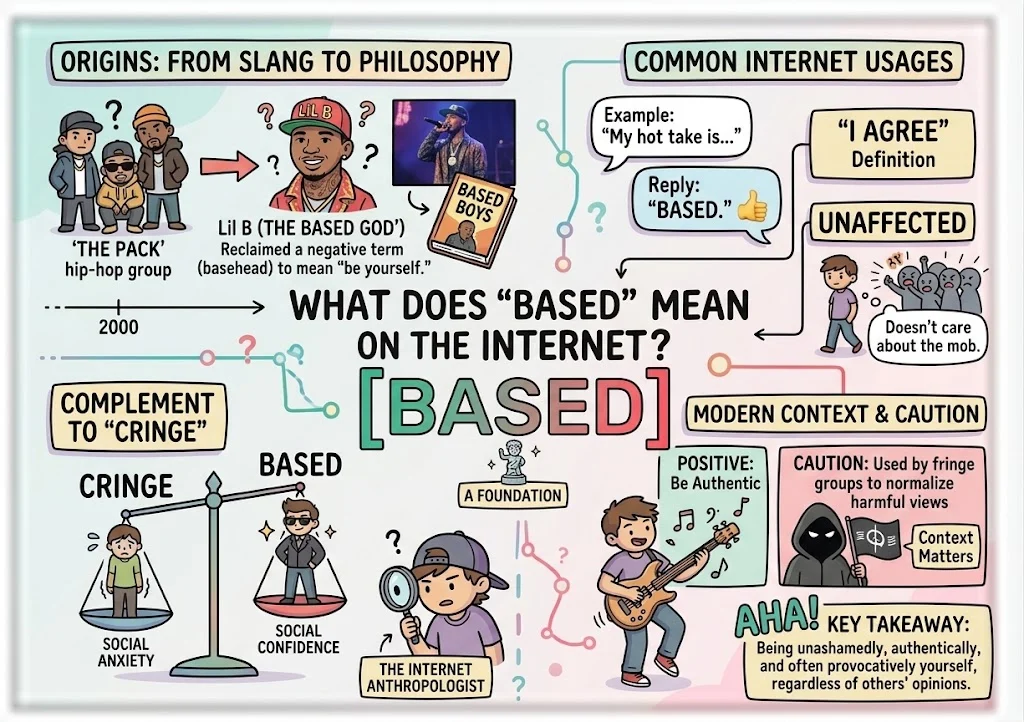
On the internet, “based” is slang used to show strong approval or respect for someone’s opinion, attitude, or action. It often means “I agree,” “I respect that,” or “you said what you really think.”
- What Does “Based” Mean Online?
- How Do People Use “Based”?
- Is “Based” Always Serious?
- What Does “Based” Mean in Social Media and Comments?
- Is “Based” Rude or Offensive?
- “Based” vs. “Based on”
- Where Did the Internet Slang “Based” Come From?
- Similar Internet Slang
- Examples of “Based” in a Sentence
- Common Misunderstanding About “Based”
- FAQs About “Based”
- What does based mean in texting?
- What does based mean in slang?
- Is based a compliment?
- Does based mean true?
- Can based be sarcastic?
- Is based appropriate in professional writing?
- How People Use “Based” Online
- What Does “Based” Mean in a Comment?
- Can “Based” Be Used Sarcastically?
- Is “Based” a Positive Word?
- Based vs. Based On
- Is It Appropriate for Professional Communication?
- Examples in Everyday Online Conversations
- Similar Internet Expressions
- What Does Based Mean on the Internet in Different Contexts?
- Based in Social Media Conversations
- Based in Text Messages
- Based in Online Debates
- When Does “Based” Sound Positive?
- When Can “Based” Sound Ironic?
- What Is the Difference Between “Based” and “Valid”?
- What Is the Opposite of “Based”?
- Can You Call a Person “Based”?
- Common Examples of “Based” in Online Conversations
- What Does “Based” Say About Someone?
- Is “Based” the Same as “I Agree”?
- Why Do People Say “Based Take”?
- What Does Based Mean on the Internet When It Is Used as a Joke?
- Should You Use “Based” in Everyday Speech?
- Final Thoughts
The tone can be sincere, humorous, or ironic depending on the conversation. It is especially common in online discussions, memes, and informal communities.more information:-TRIGGERED meaning or sjw meaning .
What Does “Based” Mean Online?
When someone calls a person or their statement “based,” they are usually praising them for expressing an opinion confidently, especially when that opinion goes against what is considered popular or socially expected.
For example:
- “He said exactly what everyone was thinking. Based.”
- “You stopped caring about other people’s opinions? That’s based.”
- “She defended her friend even when everyone disagreed. Based.”
In these examples, “based” communicates approval rather than simply describing something as factual.
How Do People Use “Based”?
“Based” can appear as a short response to a post, comment, video, or opinion.
Someone might write:
“Based.”
This means something like:
“I agree with this.”
“I respect your position.”
“That’s a bold and honest take.”
“You’re not afraid to say it.”
It can also be used before or after a statement:
- “That’s a based opinion.”
- “Honestly, based take.”
- “He’s being based for saying that.”
The exact meaning depends on the surrounding conversation.
Is “Based” Always Serious?
No. Internet users sometimes use “based” jokingly or ironically.
For example, if a friend makes an obviously ridiculous statement, another person might reply “based” as a joke. In that situation, the word does not necessarily indicate genuine agreement.
Context, punctuation, emojis, and the overall tone of the conversation can help determine whether “based” is sincere or sarcastic.
What Does “Based” Mean in Social Media and Comments?
In social media comments, “based” is often a quick way to express approval of someone’s take.
For example:
Person A: “I’d rather stay home and read than go to a huge party.”
Person B: “Based.”
Here, Person B is essentially saying that they respect or agree with that preference.
It can also be used when someone expresses an unpopular opinion confidently:
Person A: “Not every movie needs a sequel.”
Person B: “Based take.”
Is “Based” Rude or Offensive?
The word itself is generally not inherently rude or offensive. It is usually a casual expression of approval.
However, the content being called “based” can matter. Someone may use the term to praise controversial, provocative, or offensive opinions. In those situations, the surrounding statement—not the word “based” itself—may be objectionable.
Because internet slang can be used ironically, it is important to consider the complete context before interpreting someone’s intention.
“Based” vs. “Based on”
“Based” in internet slang is different from the ordinary phrase “based on.”
“Based on” means something is developed from, influenced by, or derived from something else.
Example:
“The movie is based on a novel.”
Internet slang works differently:
“That opinion is based.”
Here, “based” is an informal expression of approval.
Where Did the Internet Slang “Based” Come From?
The modern internet use of “based” is associated with online slang and later became widely used in memes and social-media discussions.
The term is commonly connected to rapper Lil B, who helped popularize a positive sense of “based” in online culture. However, the word has a longer history and had other meanings before its modern internet use.
Because the history of the slang developed through online communities and popular culture, claims about a single exact starting point should be treated carefully.
Similar Internet Slang
Depending on the context, words and expressions similar to “based” include:
- Valid — used to show that someone’s opinion or choice is understandable or respected.
- W — internet slang for a win or something positive.
- Respect — directly expresses admiration.
- Facts — signals strong agreement with a statement.
- Real — often means that a statement feels honest, relatable, or genuine.
- Based take — specifically praises someone’s opinion or viewpoint.
These expressions are not perfect synonyms. Their meanings and tones can vary depending on the community and conversation.
Examples of “Based” in a Sentence
Here are some natural examples:
- “You chose sleep over going out? Based.”
- “That was a surprisingly based opinion.”
- “He doesn’t follow trends just because everyone else does. Based.”
- “She gave an honest answer instead of pretending to agree.”
- “That’s a based take, even if I don’t completely agree.”
- “Everyone in the comments called his response based.”
Common Misunderstanding About “Based”
A common mistake is assuming that “based” always means “correct.”
It does not necessarily mean that the speaker believes a statement is objectively true. Instead, it usually expresses approval, admiration, agreement, or respect for the attitude behind the statement.
Someone can even call an opinion “based” while using the word sarcastically.
FAQs About “Based”
What does based mean in texting?
In texting, “based” usually means “I agree,” “I respect that,” or “that’s a bold and honest opinion.”
What does based mean in slang?
As slang, “based” is a positive reaction to someone’s opinion, behavior, or attitude, particularly when they express themselves confidently.
Is based a compliment?
Usually, yes. Calling someone “based” generally communicates approval or respect, although it can also be used sarcastically.
Does based mean true?
Not necessarily. “Based” usually expresses approval rather than confirming that something is objectively true.
Can based be sarcastic?
Yes. People often use internet slang ironically, so “based” can be sincere or sarcastic depending on context.
Is based appropriate in professional writing?
Generally, no. “Based” in this slang sense is informal internet language, so it is better avoided in formal workplace or academic writing.
How People Use “Based” Online
“Based” is usually used as a quick way to show approval, agreement, or respect for someone’s opinion or behavior. It is especially common in informal online conversations.
For example:
- “You said exactly what I was thinking. Based.”
- “He doesn’t care about trends. Based.”
- “That’s a pretty based opinion.”
The word often suggests that someone is being confident, honest, or unwilling to simply follow the crowd.
What Does “Based” Mean in a Comment?
When someone comments “based” under a post or video, they are usually showing that they approve of the statement being discussed.
For example:
“Everyone should be allowed to enjoy things without worrying about other people’s opinions.”
A reply such as:
“Based.”
means something similar to:
“I agree.”
“I respect that.”
“That’s a good take.”
The exact meaning depends on the conversation and the person using it.
Can “Based” Be Used Sarcastically?
Yes. “Based” can be used seriously or ironically.
For example, someone might make an obviously exaggerated statement, and their friend could reply “based” as a joke. In that situation, the person may not genuinely agree with the statement.
This is common with internet humor, where words are often used in exaggerated or unexpected ways.
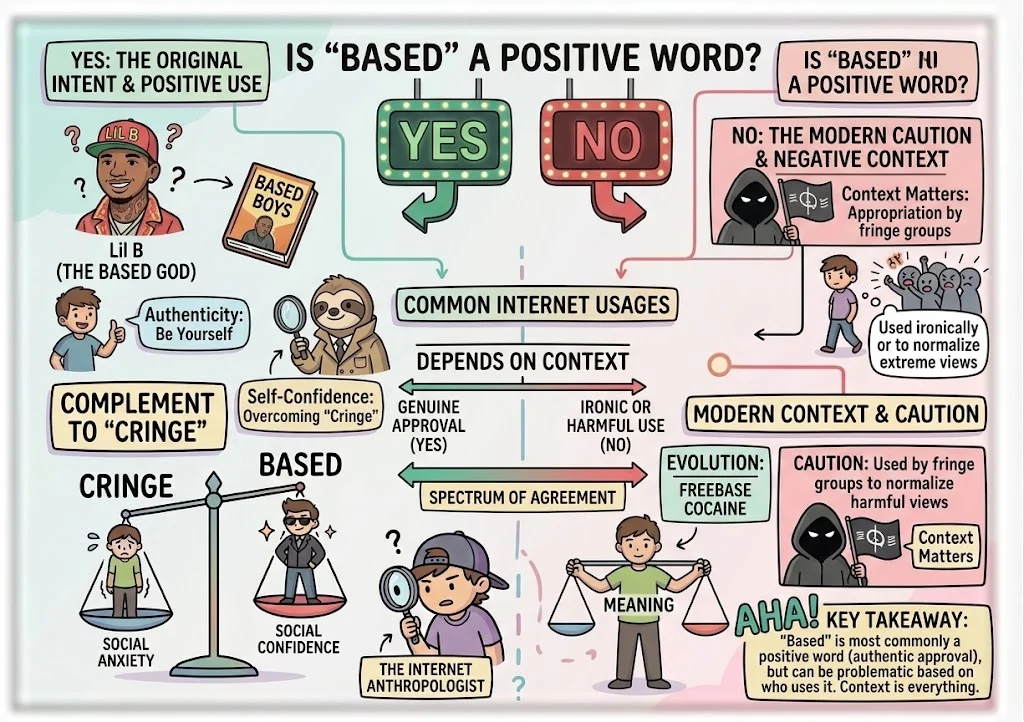
Is “Based” a Positive Word?
Usually, yes. In internet slang, “based” is generally positive and communicates approval or admiration.
However, the word itself does not automatically make the statement being praised positive or acceptable. Someone could describe a controversial opinion as “based,” so the surrounding context matters.
It is therefore better to judge the complete statement rather than interpreting the word alone.
Based vs. Based On
The slang use of “based” should not be confused with the ordinary phrase “based on.”
In standard English, “based on” means something is developed from or influenced by another thing.
Example:
“The film is based on a true story.”
Internet slang has a different meaning:
“That take is based.”
Here, “based” is being used as an informal expression of approval.
Is It Appropriate for Professional Communication?
The slang meaning of “based” is informal. It can work naturally in casual conversations, online communities, comments, texts, and messages between friends.
It is usually not appropriate for:
- Formal business emails
- Academic assignments
- Professional reports
- Official documents
- Formal presentations
In professional writing, clearer expressions such as “I agree,” “I respect that opinion,” or “That is a reasonable point” are usually better choices.
Examples in Everyday Online Conversations
Here are some natural examples of how people might use the expression:
- “You’d rather save your money than buy things you don’t need? Based.”
- “She gave her honest opinion instead of agreeing with everyone. Based.”
- “That’s a bold take, but I respect it. Based.”
- “He doesn’t follow every new trend. Honestly, based.”
- “Based take. I completely agree with you.”
- “Someone finally said it. Based.”
These examples show how the expression can communicate agreement, admiration, or playful approval.
Similar Internet Expressions
Several other informal expressions can communicate a similar reaction, although they are not exact replacements.
- Valid — shows that you consider someone’s opinion or choice reasonable.
- Facts — strongly expresses agreement with a statement.
- Real — suggests that something feels honest, genuine, or relatable.
- W — describes something as a win or positive outcome.
- Respect — directly expresses admiration for someone’s position or action.
The best choice depends on the tone and context of the conversation.
What Does Based Mean on the Internet in Different Contexts?
The phrase “what does based mean on the internet” usually refers to the slang meaning of “based” rather than its traditional dictionary meaning. Online, people use “based” to show approval, agreement, or respect for someone’s opinion, attitude, or action.
The expression can have slightly different shades of meaning depending on the conversation.
Based in Social Media Conversations
On social media, “based” is often used as a short reaction to someone’s post or opinion.
For example:
“People should enjoy what they like without worrying about trends.”
A reply might simply be:
“Based.”
Here, the commenter is showing agreement or approval.
Based in Text Messages
In texting, the word can be used casually between friends. Someone might share an opinion and receive “based” as a quick response.
Example:
“I’m staying home tonight. I’d rather watch movies.”
“Based 😂”
In this situation, the response can mean “I agree” or “I respect that choice.”
Based in Online Debates
During online discussions, people may use “based” when they think someone has expressed an unusually confident or unpopular opinion.
Example:
“I don’t think every popular trend is worth following.”
“Based take.”
The phrase suggests that the speaker respects the person’s willingness to express that view.
When Does “Based” Sound Positive?
“Based” normally has a positive or approving tone when someone uses it sincerely.
It can communicate:
- Agreement with an opinion
- Respect for someone’s confidence
- Approval of a decision
- Appreciation for honesty
- Support for an unconventional viewpoint
For example:
“She ignored the pressure to follow everyone else and did what made her happy. Based.”
The speaker is praising her independence.
When Can “Based” Sound Ironic?
The meaning can change when the word is used sarcastically.
Someone might make an obviously exaggerated statement, and another person could respond:
“Absolutely based.”
In this case, the speaker may be joking rather than expressing genuine agreement.
This is why context is important when interpreting internet slang. The same word can communicate sincere approval in one conversation and humor in another.
What Is the Difference Between “Based” and “Valid”?
“Based” and “valid” can both express approval, but they are not identical.
Valid often means that someone’s opinion, feeling, or choice is reasonable or understandable.
Based usually has a stronger internet-slang tone and can suggest admiration for someone’s confidence, honesty, or willingness to go against popular opinion.
For example:
“Your feelings are valid.”
This is more supportive and empathetic.
“Based take.”
This is more casual and internet-oriented.
What Is the Opposite of “Based”?
There is no single universal opposite of “based,” but online users may use negative slang such as “cringe” when they strongly disapprove of something or find it embarrassing.
However, these words are not exact opposites in every situation.
“Based” generally communicates approval, while “cringe” often communicates disapproval or embarrassment.
Can You Call a Person “Based”?
Yes. Someone can be described as “based” when the speaker admires their attitude, behavior, or opinions.
For example:
“He told everyone what he really thought. He’s based.”
This does not mean the person is objectively correct. It means the speaker approves of or respects what the person did or said.
What Does Based Mean on the Internet? — Part 4
Common Examples of “Based” in Online Conversations
Understanding what does based mean on the internet becomes easier when you see how people actually use the expression. Here are some natural examples:
- “You’d rather save money than buy things you don’t need? Based.”
- “She finally said what everyone was thinking. Based.”
- “I don’t follow every trend just because it’s popular.”
“Based.” - “That is a surprisingly based opinion.”
- “He chose to do what made him happy instead of pleasing everyone else. Based.”
- “Based take. I completely agree with you.”
These examples show that the expression usually communicates approval or respect.
What Does “Based” Say About Someone?
When someone is described as “based,” the speaker is usually praising their attitude rather than claiming that everything they said is factually correct.
The person may be seen as:
- Confident
- Honest
- Independent
- Unafraid of criticism
- Willing to express an unconventional opinion
This is why what does based mean on the internet cannot always be reduced to simply “correct.” The slang is more about the speaker’s reaction to an opinion or behavior.
Is “Based” the Same as “I Agree”?
Not exactly.
When someone says “I agree,” they clearly indicate that they share the same opinion. “Based” can express agreement, but it can also communicate admiration or respect without complete agreement.
For example:
“I don’t like this movie, but I respect your reasoning. Based.”
Here, the person may not share the same opinion, but they appreciate how confidently or thoughtfully it was expressed.
Why Do People Say “Based Take”?
“Based take” is a variation commonly used when reacting to someone’s viewpoint.
A “take” is an opinion or interpretation of a subject. Therefore, calling something a “based take” generally means the speaker considers that opinion worthy of approval or respect.
For example:
“Not every new product is automatically better than the old version.”
“Based take.”
The response indicates that the commenter appreciates the viewpoint.
What Does Based Mean on the Internet When It Is Used as a Joke?
The answer to what does based mean on the internet can change when humor is involved.
Internet users often exaggerate slang for comedic effect. Someone might respond “based” to an absurd statement simply because the unexpected reaction makes the conversation funny.
For example:
“I eat pizza with a spoon.”
“Based.”
This does not necessarily mean the second person genuinely supports eating pizza with a spoon. It may simply be playful or ironic.
Should You Use “Based” in Everyday Speech?
You can use “based” in casual speech, especially when talking with people who understand current internet slang.
For example:
“Honestly, that’s based.”
However, not everyone will understand the slang immediately. In formal or unfamiliar settings, clearer expressions such as “I agree” or “I respect that” are safer.
Final Thoughts
“Based” is a popular form of internet slang used to express approval, agreement, or respect for someone’s opinion or attitude. Its tone can be serious, humorous, or sarcastic depending on the context. Understanding the conversation around the word is the best way to know exactly what the speaker means.