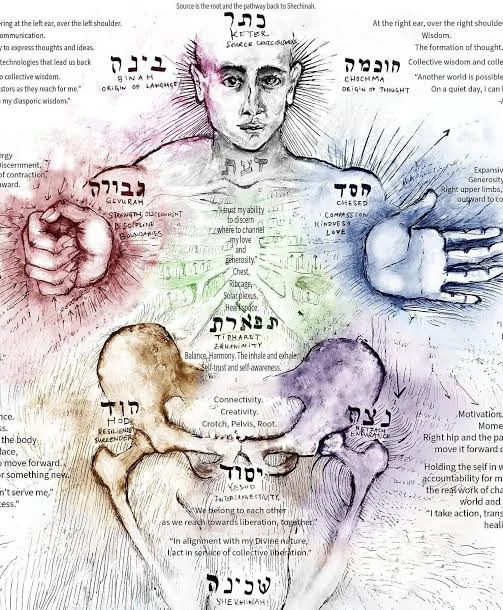
Many people first encounter Adam Kadmon while reading about Kabbalah, Jewish mysticism, or Western esoteric traditions. The term does not refer to the biblical Adam in a literal sense. Instead, it describes the primordial spiritual blueprint of humanity—the first divine emanation through which infinite divine light begins to manifest according to Kabbalistic teachings.
- Quick Answer
- What Does Adam Kadmon Mean?
- The Origins of the Concept
- Why Is It Called the Primordial Human?
- Adam Kadmon in Kabbalah
- It Represents the First Emanation
- It Connects Infinity with Creation
- It Contains the Blueprint of Reality
- Adam Kadmon and the Biblical Adam
- Symbolism Explained
- Relationship to the Tree of Life
- Common Misconceptions
- It Is the Same as Adam from Genesis
- It Refers to a Giant Cosmic Person
- All Jewish Traditions Teach This Concept
- It Is a Universal Religious Belief
- Examples of the Term in Context
- Why the Idea Still Interests People Today
- Related Terms
- Quick Study Tips
- Frequently Asked Questions
- Is Adam Kadmon the first human?
- Is Adam Kadmon mentioned in the Bible?
- What does the name literally mean?
- Is Adam Kadmon God?
- Why is a human form used?
- Is this concept accepted by all Jews?
- Why is it important in Kabbalah?
- Where can I learn more?
Understanding this idea can seem difficult at first because it belongs to a symbolic and mystical tradition rather than everyday language. Once you know the historical background and the key concepts, however, it becomes much easier to appreciate why this figure occupies such an important place in Jewish mysticism.Click more information
Quick Answer
| Term | Meaning | Tradition | Key Idea |
|---|---|---|---|
| Adam Kadmon | The primordial spiritual human | Kabbalah | First divine emanation after the Infinite |
| Biblical Adam | The first human created in Genesis | Judaism & Christianity | Historical and theological figure |
| Primordial Man | General comparative term | Various traditions | Archetypal human principle |
What Does Adam Kadmon Mean?
The phrase comes from Hebrew:
- Adam (אָדָם) – human, man, or humanity
- Kadmon (קַדְמוֹן) – primordial, ancient, original
Together, the expression literally means “Primordial Human” or “Original Human.”
In Kabbalistic thought, this is not a physical person. Instead, it represents the first complete spiritual manifestation through which God’s infinite light begins to unfold into creation.
Think of it as an ideal cosmic blueprint rather than a human being made of flesh and blood.
The Origins of the Concept
The idea developed within Jewish mystical literature and became especially important in Lurianic Kabbalah, the school founded by the sixteenth-century rabbi Isaac Luria.
According to this tradition:
- God, known as Ein Sof (“the Infinite”), is beyond all description.
- Creation begins through a process of divine emanation.
- The primordial spiritual form appears as the first complete expression of divine order.
- From this level emerge further stages that eventually lead to the created universe.
Rather than describing history, these teachings explain the relationship between the Infinite and the created world through symbolic language.
Why Is It Called the Primordial Human?
The imagery of a “human” does not suggest an ordinary person.
Instead, the human form symbolises:
- completeness
- harmony
- balance
- unity
- the organisation of divine attributes
Many Kabbalistic texts describe the Sefirot—the ten divine attributes—as being arranged in a pattern resembling the human body. This symbolism helps readers visualise complex spiritual relationships.
The emphasis is on structure and meaning, not anatomy.
Adam Kadmon in Kabbalah
Within Kabbalah, this concept serves several important purposes.
It Represents the First Emanation
Rather than being God Himself, it is the first way divine light becomes organised after emerging from the Infinite.
It Connects Infinity with Creation
It functions as a bridge between the unknowable divine source and the universe that humans experience.
It Contains the Blueprint of Reality
Mystics often describe it as containing the perfect pattern from which all later creation unfolds.
Adam Kadmon and the Biblical Adam
One of the most common misunderstandings is assuming these are the same figure.
| Adam Kadmon | Biblical Adam |
|---|---|
| Primordial spiritual archetype | First human in Genesis |
| Mystical concept | Biblical character |
| Exists before physical creation | Created during creation |
| Symbolic and metaphysical | Historical and theological |
| Central to Kabbalah | Central to Genesis |
Although both use the word “Adam,” they belong to different contexts.
Symbolism Explained
The symbolism surrounding this concept is rich and layered.
Some of its most common meanings include:
- Unity – all creation begins in perfect harmony.
- Divine order – reality follows an intentional pattern.
- Human potential – humanity reflects aspects of the divine image.
- Cosmic balance – spiritual attributes exist in harmony before fragmentation.
- Perfection – the ideal state before imperfection enters creation.
These meanings should be understood metaphorically rather than literally.
Relationship to the Tree of Life
The Tree of Life is one of the best-known diagrams in Kabbalah.
It consists of ten Sefirot, or divine attributes, connected by pathways.
Many teachers explain that the arrangement of these attributes mirrors the symbolic structure of the primordial human:
- Crown corresponds to divine will.
- Wisdom and Understanding represent intellect.
- Mercy and Strength express balance.
- Foundation channels creative energy.
- Kingdom reflects manifestation in the physical world.
This comparison helps students understand abstract spiritual ideas through familiar imagery.
Common Misconceptions
It Is the Same as Adam from Genesis
No. The biblical Adam is the first human, while this is a mystical archetype.
It Refers to a Giant Cosmic Person
Not literally.
The human form is symbolic, expressing order and completeness rather than physical dimensions.
All Jewish Traditions Teach This Concept
No.
It belongs primarily to Kabbalistic and mystical traditions. Many branches of Judaism focus on biblical, legal, or philosophical teachings without emphasising this idea.
It Is a Universal Religious Belief
Although similar ideas appear in several spiritual traditions, this specific concept is rooted in Jewish mysticism.
Examples of the Term in Context
Because it belongs to religious and academic discussions, the phrase usually appears in specialised writing.
Examples:
- The scholar explained how Adam Kadmon functions as the first divine emanation in Kabbalah.
- Students compared the symbolic figure with the biblical Adam.
- The book explores the relationship between Adam Kadmon and the Tree of Life.
- Many mystical interpretations treat the primordial human as a blueprint for creation.
- The lecturer stressed that the concept should not be understood literally.
Why the Idea Still Interests People Today
Interest has grown beyond traditional religious study.
People encounter the concept through:
- comparative religion
- philosophy
- history of mysticism
- psychology
- literature
- Western esoteric traditions
- art and symbolism
Modern readers are often drawn to its exploration of humanity, creation, and the relationship between the finite and the infinite.
Related Terms
If you’re studying Jewish mysticism, you’ll probably come across these ideas as well.
| Term | Meaning |
|---|---|
| Ein Sof | The Infinite Divine |
| Sefirot | Ten divine attributes or emanations |
| Tree of Life | Diagram showing relationships among the Sefirot |
| Tzimtzum | Divine contraction before creation |
| Shekhinah | Divine presence dwelling among creation |
| Lurianic Kabbalah | School of Kabbalah developed by Isaac Luria |
Understanding these terms makes the broader tradition much easier to follow.
Quick Study Tips
If you’re learning about this subject for the first time, remember these points:
- It is symbolic, not biological.
- It belongs to Jewish mysticism, especially Kabbalah.
- It represents the first divine emanation, not God Himself.
- It is different from the Adam in the Book of Genesis.
- The human form symbolises harmony, order, and completeness.
These five ideas cover most introductory explanations.
Frequently Asked Questions
Is Adam Kadmon the first human?
No. In Kabbalah, it is a primordial spiritual archetype rather than the first physical human described in Genesis.
Is Adam Kadmon mentioned in the Bible?
No. The concept developed in later Jewish mystical literature rather than the biblical text itself.
What does the name literally mean?
The Hebrew words mean “Primordial Human” or “Original Human.”
Is Adam Kadmon God?
No. Kabbalistic teachings distinguish between Ein Sof, the Infinite Divine, and the first emanation that serves as the beginning of creation.
Why is a human form used?
The human body symbolises harmony, organisation, and the relationship among divine attributes. It should not be interpreted as a literal physical description.
Is this concept accepted by all Jews?
No. It is primarily associated with Kabbalah and Jewish mystical traditions rather than all schools of Jewish thought.
Why is it important in Kabbalah?
It explains how divine infinity begins to relate to the created universe through symbolic stages of emanation.
Where can I learn more?
A good starting point is the Wikipedia article on Adam Kadmon, followed by introductory books on Kabbalah from respected scholars. For dictionary-style language guidance, see Merriam-Webster for general terminology.