A polyglot is someone who speaks or knows several languages, typically more than two or three, often gaining that ability through years of consistent study, travel, or exposure to different cultures and communities. The word can also describe something made up of multiple languages, like a polyglot text or dictionary, rather than referring only to a person. For more insights, read here:- para meaning and obliterated meaning.
- Quick Definition
- The Polyglot Meaning in Everyday Use
- Where the Word Comes From
- How Many Languages Make Someone a Polyglot?
- Is Being a Polyglot the Same as Being Fluent in Everything?
- Is "Polyglot" Ever Used Negatively?
- Texting and Social Media Use
- Common Misunderstanding
- Similar Words and Expressions
- Workplace Context
- Dating and Social Context
- Frequently Asked Questions
- What is the simplest way to explain the polyglot meaning?
- Is polyglot a compliment?
- Do you have to be fluent to be called a polyglot?
- What's the difference between bilingual and polyglot?
- Where does the word polyglot come from?
- Can a polyglot forget a language over time?
- Wrapping Up
Quick Definition
- Polyglot (noun/adjective): a person who speaks multiple languages; also used to describe something containing or expressed in several languages.
- Example: “She’s a true polyglot, fluent in five languages by the time she turned thirty, and the polyglot meaning fits her perfectly.”
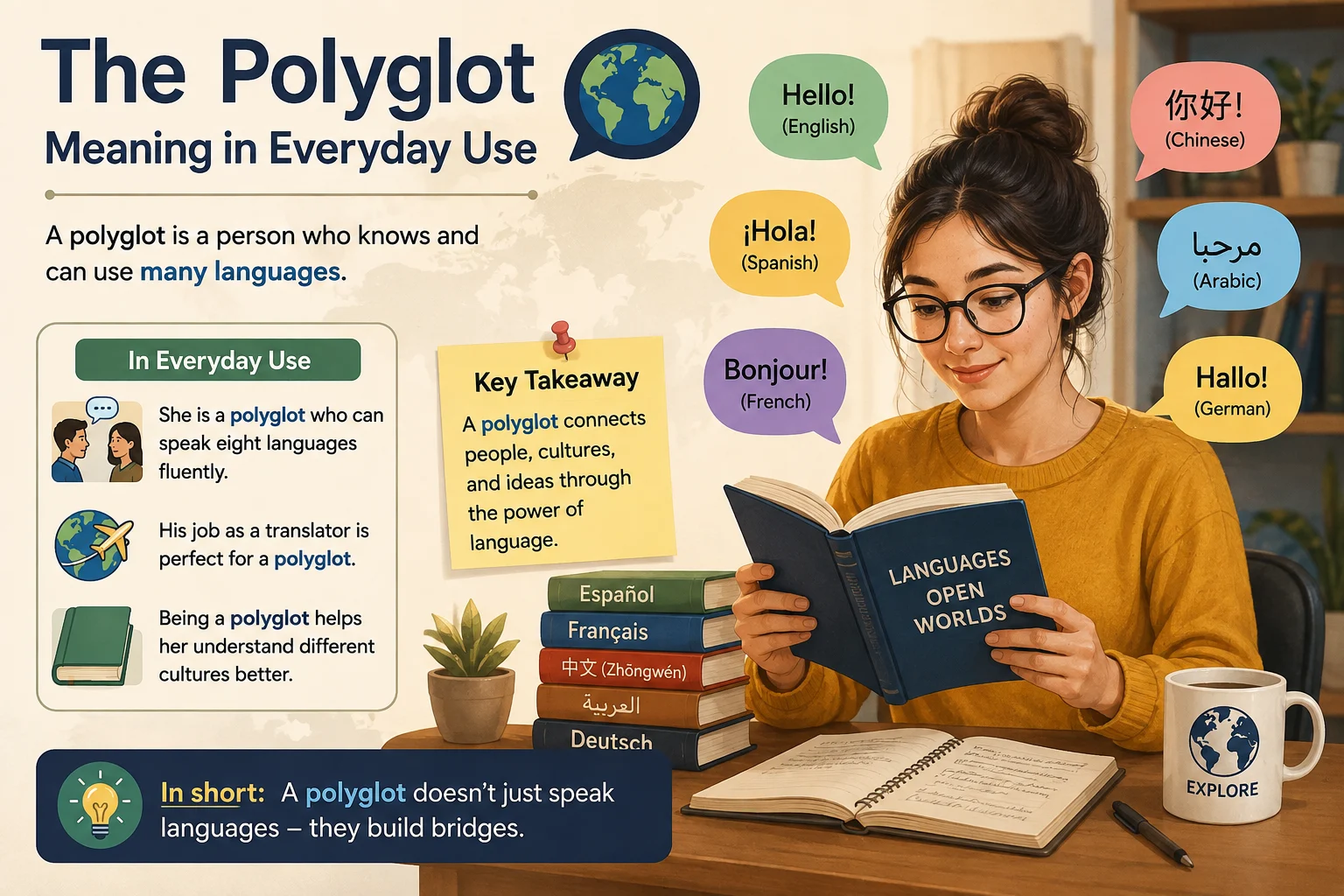
The Polyglot Meaning in Everyday Use
In everyday conversation, the polyglot meaning usually points to a person with genuine skill across multiple languages, not just someone who knows a few basic phrases. It’s generally used as a compliment, recognizing real linguistic ability.
People often reach for this word specifically because “speaks a lot of languages” feels clunky, while “polyglot” captures the same idea in a single, precise term. The polyglot meaning carries a sense of admiration that a plainer phrase might not.
Example sentences:
- “Growing up in a genuinely multilingual household turned him into a natural polyglot from an early age.”
- “The experienced tour guide was a polyglot, switching effortlessly between four different languages depending on the group.”
- “Being a polyglot opened up job opportunities for her that she wouldn’t have otherwise had access to.”
- “He’s become something of a polyglot after many years of traveling extensively for work.”
Where the Word Comes From
“Polyglot” comes from Greek, combining “poly” (meaning “many”) and “glotta” or “glossa” (meaning “tongue” or “language”). The word has been used in English for centuries, historically applied to multilingual texts, like Bibles printed in several languages side by side, before becoming more commonly associated with multilingual people.
This shift from describing texts to describing people is a genuinely useful piece of context for understanding the full polyglot meaning today. The word’s root idea, many tongues or languages brought together, applies just as naturally to a printed page as it does to a person.
How Many Languages Make Someone a Polyglot?
There’s no single official number agreed upon, but the term generally applies to people who speak three or more languages with reasonable, everyday fluency. Someone who knows just two languages is more commonly and precisely called “bilingual,” while “polyglot” implies a genuinely broader linguistic range.
- Bilingual: speaks two languages fluently, usually from an early age or through consistent, sustained practice.
- Trilingual: speaks three languages with a comparable, reasonable level of everyday fluency.
- Polyglot: generally speaks several languages, often more than three, spanning different language families entirely.
Because there’s no strict, universally agreed cutoff, the polyglot meaning stays somewhat flexible in everyday practice. Someone who speaks four languages fluently and someone who speaks eight might both reasonably be called polyglots, even though their overall skill level clearly differs quite a bit.
Is Being a Polyglot the Same as Being Fluent in Everything?
Not necessarily always the case. Many polyglots have genuinely varying levels of fluency across their different languages, being highly fluent in some and merely conversational or intermediate in others depending on how recently they’ve practiced. The term doesn’t require perfect, native-level mastery of every single language spoken.
This nuance is genuinely important to the polyglot meaning as language learners actually experience it in real life. Very few people manage to maintain identical fluency across five or six languages at the exact same time, so the label allows plenty of room for a realistic mix of stronger and weaker languages.
Is “Polyglot” Ever Used Negatively?
No, “polyglot” is almost always used positively or genuinely neutrally, actively praising linguistic skill and versatility rather than criticizing it in any way. It doesn’t carry an offensive or negative connotation in standard, everyday use.
This consistently positive framing is one of the more stable parts of the polyglot meaning, unlike some language-related terms that can shift tone depending on context or speaker.
Texting and Social Media Use
“Polyglot” occasionally shows up in bios, captions, or posts related to language learning, travel, or personal achievements, often as a proud descriptor rather than casual slang.
- “Language learning progress update: officially and proudly calling myself a polyglot now after years of hard work!”
- “Polyglot life genuinely means constantly switching languages mid-sentence without even realizing it’s happening.”
- “Met a genuine polyglot on the long train ride who switched between five languages within one single conversation.”
In these settings, the polyglot meaning usually carries a genuine note of pride, marking a personal milestone reached after years of consistent language study and real dedication.
Common Misunderstanding
Some people wrongly assume “polyglot” only refers to naturally gifted language learners, but many genuine polyglots developed their impressive skills gradually through deliberate, consistent study and daily practice rather than relying on innate talent alone.
This misunderstanding tends to discourage many people from pursuing language learning, as if the polyglot meaning were reserved only for a rare, exceptionally gifted few. In reality, most successful polyglots describe their skill as the direct result of consistent, deliberate effort over time, not a special inborn talent.
Similar Words and Expressions
- Multilingual — a broader, more neutral term for genuinely speaking multiple languages, without the same implication of especially impressive skill.
- Bilingual — specifically and precisely refers to knowing exactly two languages.
- Linguist — someone who studies language academically and scientifically, which doesn’t necessarily mean they personally speak many languages themselves.
- Language enthusiast — a casual, everyday way to describe someone genuinely passionate about learning languages, without formally claiming full polyglot status.
- Hyperpolyglot — an informal term sometimes used for someone who speaks an unusually high number of languages, well beyond the typical polyglot meaning.
None of these words are exact, perfect substitutes for one another. Each captures a slightly different angle on language ability, from pure academic study to casual, everyday enthusiasm to genuinely exceptional multilingual skill built over many years of practice.
Workplace Context
“Polyglot” occasionally shows up in professional settings, especially in job descriptions, resumes, or team introductions, where being a polyglot can genuinely be a valuable, marketable skill.
- “The specialized company specifically sought out a polyglot to manage client relationships across three entire continents.”
- “Being the resident polyglot on the support team meant she handled tickets in four completely different languages daily.”
In a workplace setting, the polyglot meaning often translates directly into real practical value, since companies operating internationally clearly benefit from employees who can communicate across language barriers without needing a professional translator.
Dating and Social Context
Occasionally, “polyglot” comes up in dating profiles or casual introductions, usually as an interesting personal detail rather than a central identity.
- “His detailed dating profile mentioned that he’s a polyglot, which honestly made for a genuinely great icebreaker.”
- “She jokingly and affectionately called herself an accidental polyglot after several years of moving between different countries.”
Frequently Asked Questions
What is the simplest way to explain the polyglot meaning?
It refers to someone who speaks several languages, typically more than two or three, with reasonable fluency in each. That single idea, genuine multilingual ability, covers most of how the term gets used.
Is polyglot a compliment?
Yes, generally. It’s used to recognize genuine language skill and is considered a positive, impressive trait, which is part of why the polyglot meaning carries so much admiration in everyday conversation.
Do you have to be fluent to be called a polyglot?
Not perfectly fluent in every language, though a reasonable level of practical ability is generally expected across the languages counted. The polyglot meaning leaves room for varying skill levels rather than demanding native mastery in each one.
What’s the difference between bilingual and polyglot?
Bilingual specifically means speaking two languages, while polyglot generally implies speaking several, often more than three. This numeric distinction is really the clearest line separating the two terms.
Where does the word polyglot come from?
It comes from Greek, combining “poly” (many) and “glotta” (tongue or language), originally applied to multilingual texts before referring mainly to people. This layered history is part of what gives the polyglot meaning its distinct, somewhat academic flavor compared to plainer words.
Can a polyglot forget a language over time?
Yes. Language skills can fade without regular use, and many polyglots find their fluency in less-practiced languages weakens over time. This doesn’t necessarily remove someone from the polyglot meaning entirely, since the label typically reflects a broader history of multilingual ability rather than a fixed, permanent test result.
Wrapping Up
The polyglot meaning ultimately comes down to genuine skill across multiple languages, whether that’s three, five, or more, built through years of learning rather than luck alone. Understanding what the word actually requires helps separate real polyglot ability from simply knowing a handful of foreign phrases picked up while traveling. For a deeper look at multilingualism and language learning, the Wikipedia entry on multilingualism is a useful starting reference.