What Does Bon Appétit Mean in French?
“What does bon appetit mean in French?” The phrase “bon appétit” literally means “good appetite” in French. In everyday use, it is a polite expression said before someone begins eating, similar to “enjoy your meal” or “have a good meal” in English.
- What Does Bon Appétit Literally Mean?
- How Do You Pronounce Bon Appétit?
- When Do French People Say Bon Appétit?
- What Is the English Equivalent of Bon Appétit?
- Is Bon Appétit Formal or Casual?
- Can You Say Bon Appétit in English?
- Is Bon Appétit Only Used in France?
- Common Misunderstanding About Bon Appétit
- Bon Appétit Examples in Sentences
- Similar French Expressions
- Does Bon Appétit Mean “Good Appetite”?
- Frequently Asked Questions
- What does bon appetit mean in French?
- Is bon appétit French?
- How do you spell bon appétit correctly?
- Is bon appétit polite?
- Can English speakers say bon appétit?
- What is the closest English translation of bon appétit?
- What Does Bon Appétit Mean in French Literally?
- What Does Bon Appétit Mean in French in Everyday Conversation?
- What Does Bon Appétit Mean in French and English?
- How Do You Pronounce Bon Appétit?
- When Should You Say Bon Appétit?
- Is Bon Appétit Formal or Casual?
- Can You Use Bon Appétit in English?
- Common Misunderstanding About Bon Appétit
- What Does Bon Appétit Mean in French Culture?
- Examples of Bon Appétit in Sentences
- Similar Expressions
- Understanding the Meaning in Context
- What Does Bon Appétit Mean in French at a Restaurant?
- What Does Bon Appétit Mean in French Among Friends?
- Is Bon Appétit a Greeting?
- Is Bon Appétit Polite?
- Bon Appétit vs. Enjoy Your Meal
- What Does Bon Appétit Mean in French Writing?
- Common Spelling Mistakes
- Does Bon Appétit Have a Negative Meaning?
- Why Do English Speakers Use Bon Appétit?
- What Does Bon Appétit Mean in French for Language Learners?
- Quick Guide to Bon Appétit
- Final Thoughts
The correct French spelling is “bon appétit,” with an accent on the “é” in “appétit.” MORE information:-twat meaning or tattoo meaning .
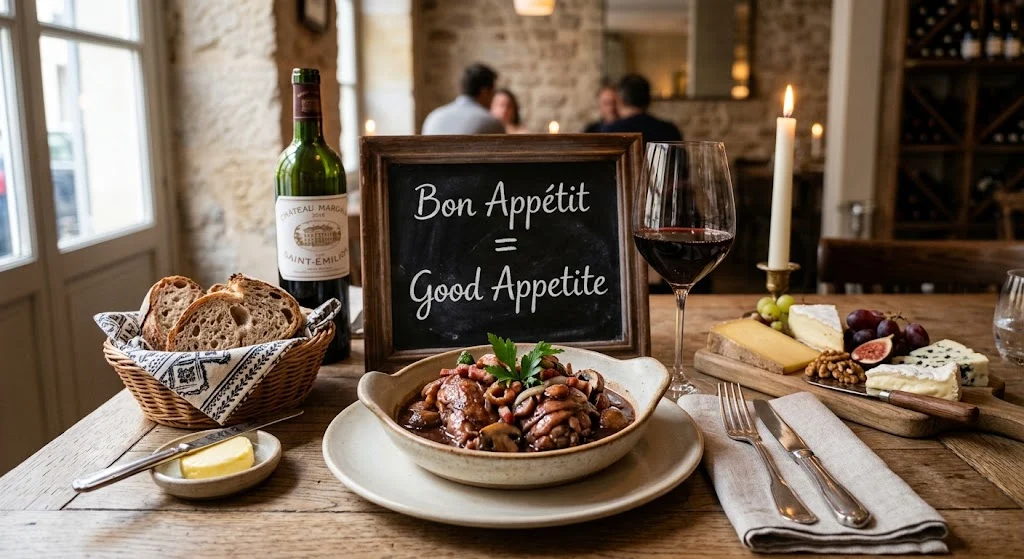
What Does Bon Appétit Literally Mean?
“Bon” means “good,” while “appétit” means “appetite.” Together, “bon appétit” literally translates as “good appetite.”
However, French speakers generally use it as a friendly expression before or around the beginning of a meal rather than as a literal comment about someone’s appetite.
For example:
“Bon appétit!” — “Enjoy your meal!”
“Bon appétit, everyone!” — “Enjoy your meal, everyone!”
How Do You Pronounce Bon Appétit?
A simple English approximation is:
bohn ah-pay-TEE
The final syllable of “appétit” receives the main emphasis.
In French, the pronunciation is closer to:
/bɔ̃ a.pe.ti/
The French nasal sound in “bon” does not have an exact equivalent in standard English, so English speakers may approximate it with “bohn.”
When Do French People Say Bon Appétit?
“Bon appétit” is commonly associated with meals and is generally said before eating.
Someone might say it when:
- Food has just been served
- Friends or family are about to eat
- Coworkers are having lunch
- A host is inviting guests to begin eating
- Someone sees another person starting a meal
For example:
“Your lunch looks delicious. Bon appétit!”
“Dinner is ready. Bon appétit!”
It can sound warm, polite, and friendly depending on the situation.
What Is the English Equivalent of Bon Appétit?
The closest natural English equivalent is “enjoy your meal.”
Other possible translations include:
- “Enjoy your food.”
- “Have a good meal.”
- “Enjoy!”
- “Hope you enjoy your meal.”
“Enjoy your meal” is usually the best translation because it communicates the expression’s everyday purpose rather than translating each word literally.
Is Bon Appétit Formal or Casual?
“Bon appétit” can work in both casual and polite situations.
You can say it to:
- Family members
- Friends
- Coworkers
- Guests
- People you are dining with
Its tone is generally pleasant and courteous. It does not automatically make a situation highly formal.
For example, a parent might say, “Bon appétit!” to a child, while a host could say the same expression to dinner guests.
Can You Say Bon Appétit in English?
Yes. “Bon appétit” is also widely understood in English, especially in contexts involving food, restaurants, cooking, or French culture.
English speakers sometimes use it simply to mean “enjoy your meal.”
For example:
“I made dinner for everyone. Bon appétit!”
Although the expression comes from French, using it in English is not necessarily an attempt to speak French fluently. It has become a familiar borrowed expression in English.
Is Bon Appétit Only Used in France?
No. “Bon appétit” is a French expression, but it is also used or understood in other French-speaking communities and by English speakers.
Its exact frequency and social conventions can vary by region and situation. In English-speaking countries, it may also be used because it sounds elegant, playful, or associated with French dining culture.
The basic meaning remains connected with wishing someone an enjoyable meal.
Common Misunderstanding About Bon Appétit
A common mistake is to interpret “bon appétit” only through its literal translation, “good appetite.”
In normal conversation, the phrase is not usually telling someone to develop a stronger appetite. It functions as a conventional expression associated with eating.
Another common mistake is spelling it as “bon apetit.” The standard French spelling is “bon appétit,” with two “p”s and an accent on the “é.”
Bon Appétit Examples in Sentences
Here are some natural examples:
“Lunch is ready—bon appétit!”
“Bon appétit! I hope you enjoy the pasta.”
“Everyone sat down at the table, and the host said, ‘Bon appétit.’”
“She smiled and said ‘bon appétit’ before starting her dinner.”
“Bon appétit, everyone. The food is still warm.”
Similar French Expressions
If you are learning French, you may encounter other expressions related to meals and politeness.
“À table !” means “Come to the table!” or “Dinner is ready!” depending on context.
“Bonne dégustation !” can be used when wishing someone an enjoyable tasting experience, particularly with food or drinks.
“Bon repas !” literally means “good meal,” although “bon appétit” is the more familiar expression for wishing someone enjoyment before eating.
Does Bon Appétit Mean “Good Appetite”?
Yes, literally.
“Bon” = “good”
“Appétit” = “appetite”
So the literal translation is “good appetite.” The natural English meaning, however, is usually “enjoy your meal.”
This difference between literal translation and natural usage is important when learning French because direct word-for-word translations do not always capture how expressions function in everyday speech.
Frequently Asked Questions
What does bon appetit mean in French?
“Bon appétit” means “good appetite” literally and is commonly used to mean “enjoy your meal.”
Is bon appétit French?
Yes. “Bon appétit” is a French expression associated with eating and wishing someone enjoyment of their meal.
How do you spell bon appétit correctly?
The standard spelling is “bon appétit,” with two “p”s in “appétit” and an acute accent over the first “e.”
Is bon appétit polite?
Yes. It is generally a friendly and courteous expression used around mealtimes.
Can English speakers say bon appétit?
Yes. English speakers commonly understand and sometimes use “bon appétit” as a way of saying “enjoy your meal.”
What is the closest English translation of bon appétit?
“Enjoy your meal” is the closest natural English equivalent.
What Does Bon Appétit Mean in French?
If you are wondering what does bon appetit mean in french, the simple answer is “enjoy your meal.” The phrase is written correctly as “bon appétit,” and it is commonly used before eating to wish someone an enjoyable meal.
When asking what does bon appetit mean in french, it is also useful to understand the difference between the literal translation and the natural meaning. “Bon” means “good,” while “appétit” means “appetite.” Therefore, the literal translation is “good appetite.” In everyday English, however, “enjoy your meal” communicates the intended meaning more naturally.
What Does Bon Appétit Mean in French Literally?
The literal meaning helps explain what does bon appetit mean in french.
The phrase contains two words:
- “Bon” — good
- “Appétit” — appetite
Together, “bon appétit” literally means “good appetite.” However, French speakers generally use the expression as a polite or friendly wish before a meal.
For example:
“Dinner is ready. Bon appétit!”
This means “Enjoy your meal!” rather than simply describing someone’s appetite.
What Does Bon Appétit Mean in French in Everyday Conversation?
Understanding what does bon appetit mean in french also requires looking at how the phrase functions in conversation.
Someone may say “bon appétit” when food has been served and people are about to start eating. A host might say it to guests, friends might say it to one another, or someone might use it casually when seeing another person having lunch.
For example:
“Here is your lunch. Bon appétit!”
The expression sounds friendly and courteous. It does not normally carry a complicated hidden meaning.
What Does Bon Appétit Mean in French and English?
When people ask what does bon appetit mean in french, they often want the best English translation.
The closest natural translations are:
- Enjoy your meal.
- Enjoy your food.
- Have a good meal.
- Enjoy!
“Enjoy your meal” is generally the clearest choice because it expresses the purpose of the French phrase rather than translating it word for word.
The literal translation, “good appetite,” is understandable, but it is not normally the most natural way to express the same idea in everyday English.
How Do You Pronounce Bon Appétit?
If you understand what does bon appetit mean in french, learning the pronunciation can make the expression easier to use.
An approximate English pronunciation is:
“bohn ah-pay-TEE”
The final part, “-tétit,” receives the main emphasis in the French pronunciation.
The accent in “appétit” is important in the written form:
Correct: bon appétit
Common misspelling: bon apetit
The standard French spelling contains two “p”s and an acute accent over the “é.”
When Should You Say Bon Appétit?
The answer to what does bon appetit mean in french becomes especially clear when you see when people use it.
You can say “bon appétit” when:
- A meal has just been served.
- People are sitting down to eat.
- You are wishing someone enjoyment before lunch.
- You are wishing guests enjoyment before dinner.
- You are speaking casually with friends or family.
Examples include:
“Bon appétit, everyone!”
“Your meal looks delicious. Bon appétit!”
“Lunch is ready—bon appétit!”
In each example, the phrase functions as a pleasant mealtime expression.
Is Bon Appétit Formal or Casual?
One reason what does bon appetit mean in french can be confusing is that the expression can appear in many different social situations.
“Bon appétit” is not restricted to highly formal occasions. It can be used with family, friends, coworkers, guests, and other people who are about to eat.
For example, a family member could say:
“Bon appétit!”
A host at a dinner could also say:
“Bon appétit, everyone.”
The tone is usually friendly and polite rather than extremely formal.
Can You Use Bon Appétit in English?
Yes. Once you understand what does bon appetit mean in french, you may notice that English speakers also use the expression.
In English, “bon appétit” is often used as a borrowed French expression meaning “enjoy your meal.” It can appear in conversations about food, restaurants, cooking, or dining.
For example:
“I’ve finished preparing dinner. Bon appétit!”
English speakers do not necessarily need to be fluent in French to understand the expression.
Common Misunderstanding About Bon Appétit
A common misunderstanding when learning what does bon appetit mean in french is assuming that “good appetite” is always the best English translation.
Although “good appetite” is the literal translation, it does not fully capture the expression’s normal conversational purpose.
A French speaker saying “bon appétit” is generally wishing someone an enjoyable meal. They are not usually commenting on how large or healthy the person’s appetite is.
Another common issue is spelling. The correct form is “bon appétit,” not “bon apetit.”
What Does Bon Appétit Mean in French Culture?
When considering what does bon appetit mean in french, the cultural context is simple: it is connected with meals and the social act of wishing someone enjoyment while eating.
It can be used before a meal in everyday situations and may contribute to a warm, welcoming atmosphere.
However, it is better not to assume that every French-speaking person uses the expression in exactly the same way. Language habits can vary according to region, family, generation, and personal preference.
Examples of Bon Appétit in Sentences
These examples show how what does bon appetit mean in french can be understood naturally in context:
“Bon appétit! I hope you enjoy the soup.”
“Everyone sat down, and Maria said, ‘Bon appétit.’”
“Here is your dinner. Bon appétit!”
“Bon appétit, everyone. The food is ready.”
“He smiled and wished us bon appétit before leaving the table.”
In each sentence, the expression is associated with enjoying a meal.
Similar Expressions
If you are learning French alongside what does bon appetit mean in french, a few related expressions may also be useful.
“À table!” can mean “Come to the table!” or signal that it is time to eat.
“Bonne dégustation!” can be used when wishing someone an enjoyable tasting experience.
“Bon repas!” literally means “good meal,” although “bon appétit” is the more familiar expression for wishing someone enjoyment before eating.
What Does Bon Appétit Mean in French? — Part 3
If you are still asking what does bon appetit mean in french, the answer is straightforward: “bon appétit” means “enjoy your meal” in natural English. Its literal translation is “good appetite,” but French speakers use it as a friendly expression connected with eating.
Understanding the Meaning in Context
To fully understand what does bon appetit mean in french, it helps to look beyond the individual words.
“Bon” means “good,” and “appétit” means “appetite.” When combined, the phrase expresses a wish that someone enjoys the food they are about to eat.
For example:
“Bon appétit! The dinner looks wonderful.”
Here, the speaker is not commenting on the person’s appetite. They are simply wishing them an enjoyable meal.
What Does Bon Appétit Mean in French at a Restaurant?
If you are wondering what does bon appetit mean in french while dining at a restaurant, you can think of it as a pleasant mealtime wish.
Someone might say “bon appétit” when a meal arrives or when everyone at the table is ready to begin eating.
For example:
“The food has arrived. Bon appétit!”
In English, the natural equivalent would be “Enjoy your meal!”
The expression can sound warm and courteous without being overly formal.
What Does Bon Appétit Mean in French Among Friends?
Among friends and family, what does bon appetit mean in french is especially easy to understand because the expression can be used casually.
A friend might say:
“Bon appétit! Save me some dessert.”
A family member could say:
“Bon appétit, everyone!”
In these situations, the phrase simply adds a friendly touch before eating.
Is Bon Appétit a Greeting?
Although what does bon appetit mean in french is sometimes misunderstood as a greeting, it is more accurately a mealtime expression.
You would not normally use “bon appétit” simply as a replacement for “hello.” Its connection to food and eating is central to its meaning.
For example, saying “Bon appétit!” to someone who is about to eat makes sense. Saying it to someone you have just met on the street would usually be inappropriate unless there is a relevant food-related context.
Is Bon Appétit Polite?
Yes, what does bon appetit mean in french can involve a polite and friendly expression used around meals.
It can be said to guests, coworkers, friends, or family members. The exact tone depends on the situation, but the expression itself is generally positive rather than rude.
For example:
“Bon appétit, Mr. Martin.”
“Bon appétit, everyone.”
Both sentences can work in appropriate dining situations.
Bon Appétit vs. Enjoy Your Meal
The easiest way to remember what does bon appetit mean in french is to connect it with the English phrase “enjoy your meal.”
There is a difference between literal and natural translation:
“Bon” = good
“Appétit” = appetite
Literal meaning = “good appetite”
Natural English meaning = “enjoy your meal”
This is a useful example of how expressions should not always be translated word for word.
What Does Bon Appétit Mean in French Writing?
When considering what does bon appetit mean in french in written communication, the expression may appear in conversations, recipes, restaurant-related writing, captions, menus, or informal messages.
For example:
“Dinner is served—bon appétit!”
A writer may also use it to give a French-inspired tone to a sentence about food.
The context determines whether the expression feels natural, playful, elegant, or simply conversational.
Common Spelling Mistakes
People searching what does bon appetit mean in french may also want to know how to spell the phrase correctly.
The standard spelling is:
“bon appétit”
Common errors include:
“bon apetit”
“bon appetit” without the accent
“bonne appetit”
The correct French expression uses “bon” and “appétit.” The noun “appétit” begins with a vowel sound, which is why “bon” is used rather than “bonne.”
Does Bon Appétit Have a Negative Meaning?
No. In ordinary usage, what does bon appetit mean in french does not involve a negative or offensive meaning.
It is generally a positive expression associated with food and enjoying a meal.
Of course, tone can always change depending on how someone speaks. Like many expressions, it could theoretically be used sarcastically in a particular situation, but sarcasm would come from the context rather than the basic meaning of the phrase.
Why Do English Speakers Use Bon Appétit?
The phrase is familiar to many English speakers, so understanding what does bon appetit mean in french is useful even if you are not studying French.
English speakers may use “bon appétit” because it is recognizable, concise, and strongly associated with dining.
For example:
“The pizza is finally here. Bon appétit!”
In this English sentence, the French expression still communicates “enjoy your meal.”
What Does Bon Appétit Mean in French for Language Learners?
For language learners, what does bon appetit mean in french is a good example of the difference between literal meaning and practical meaning.
A beginner might translate it as “good appetite.” That translation is technically literal, but a natural English speaker would usually say “enjoy your meal.”
Learning both meanings is useful because it helps you understand French expressions more naturally instead of translating every word separately.
Quick Guide to Bon Appétit
Here is the simplest way to remember what does bon appetit mean in french:
Phrase: bon appétit
Language: French
Literal translation: good appetite
Natural English meaning: enjoy your meal
Typical context: before or around a meal
Tone: generally friendly and polite
Correct spelling: bon appétit
Final Thoughts
So, what does bon appetit mean in french? It literally means “good appetite,” but its natural English meaning is “enjoy your meal.” The expression is generally friendly and polite and is commonly associated with enjoying a meal.
Understanding this simple French expression can help you recognize it in conversations, restaurants, recipes, and English-language writing.
For more information about French language and culture, you can explore French language on Wikipedia.