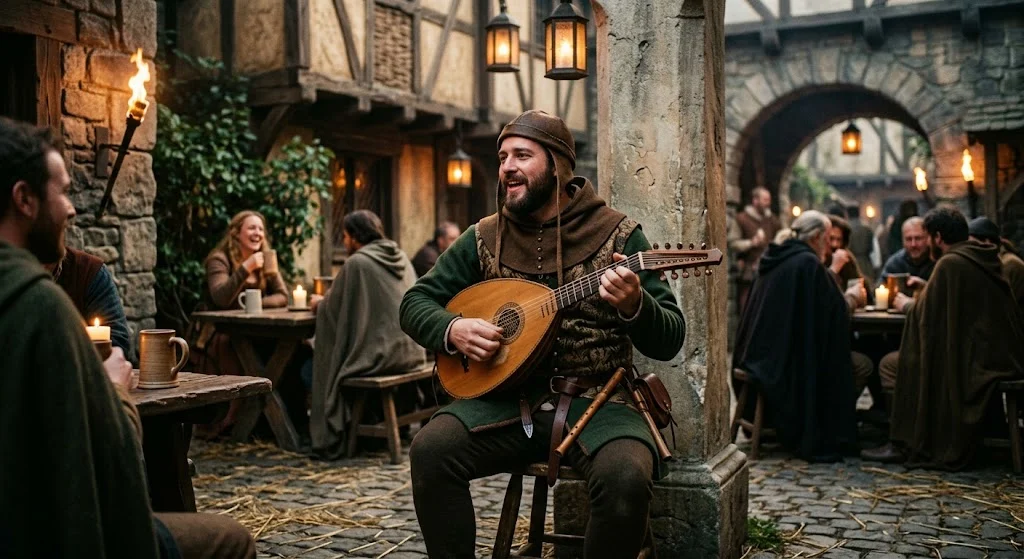
A troubadour is a poet and musician, especially one associated with medieval southern France, who composed and performed songs about love, romance, chivalry, and other subjects. Today, troubadour can also describe a traveling or performing singer-songwriter.more information:-pithy meaning or polyglot meaning .
- What Does Troubadour Mean?
- Troubadour Meaning in Simple English
- What Is a Troubadour?
- Troubadour in Modern English
- Troubadour Pronunciation
- Troubadour as a Noun
- Troubadour Meaning in Literature and History
- Troubadour and Courtly Love
- Troubadour vs. Minstrel
- Troubadour vs. Bard
- Is Troubadour a Positive or Negative Word?
- Common Uses of Troubadour
- Historical Context
- Literary Context
- Modern Music
- Figurative Use
- Examples of Troubadour in a Sentence
- Synonyms for Troubadour
- Antonyms for Troubadour
- Where Does the Word Troubadour Come From?
- Common Misunderstanding About Troubadour
- What Does Modern Troubadour Mean?
- Frequently Asked Questions
- What is the simple meaning of troubadour?
- Is a troubadour a singer?
- What did troubadours sing about?
- Is troubadour still used today?
- Is troubadour the same as a bard?
- Is troubadour a positive word?
- The Role of a Troubadour
- Troubadour Meaning in Medieval Culture
- Why Were Troubadours Important?
- Troubadour Meaning in Modern Music
- Modern Troubadour Meaning and Storytelling
- Is a Troubadour Always a Wandering Singer?
- Troubadour Meaning in a Sentence
- Troubadour Meaning in Literature
- Is Troubadour a Romantic Word?
- Troubadour vs. Singer-Songwriter
- Troubadour vs. Balladeer
- What Does Calling Someone a Troubadour Imply?
- Common Misunderstandings About Troubadour Meaning
- How to Use Troubadour Correctly
- Quick Summary of Troubadour Meaning
What Does Troubadour Mean?
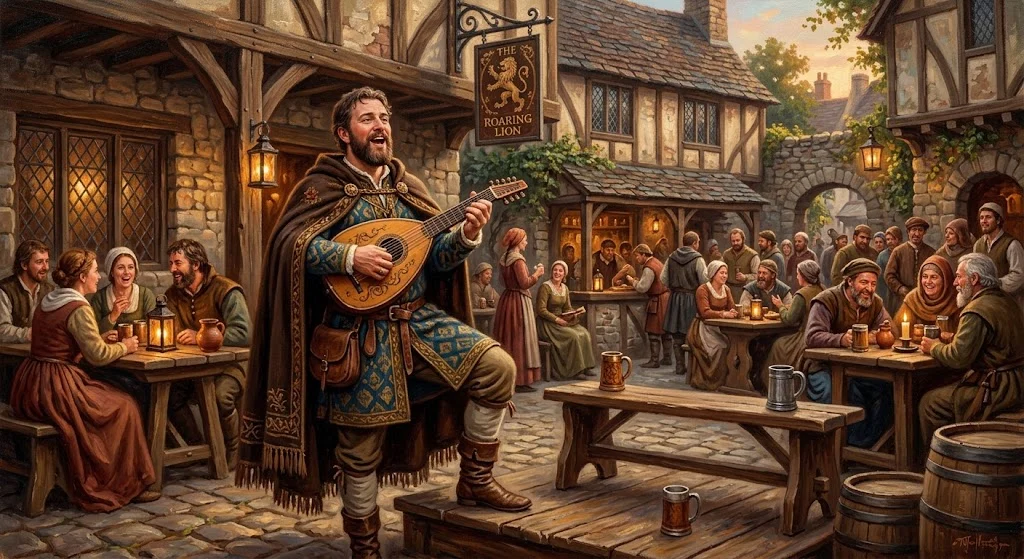
The word “troubadour” traditionally refers to a medieval poet-musician who wrote and performed lyrical songs, particularly in the Occitan-speaking regions of southern France.
In modern English, troubadour can also refer more broadly to a singer-songwriter who performs original songs, especially one known for storytelling or poetic lyrics.
Example:
- “The troubadour entertained the audience with songs about love and adventure.”
- “The young troubadour traveled from town to town performing his own music.”
Troubadour Meaning in Simple English
In simple English, a troubadour is a poet or singer who performs songs, traditionally about love and romance.
The term often suggests more than simply being a musician. It can evoke the image of someone who combines music, poetry, storytelling, and performance.
What Is a Troubadour?
Historically, troubadours were creative performers connected with the medieval courts and aristocratic culture of southern France. They composed lyrical poetry and music and performed their works for audiences.
Their songs often explored themes such as:
- Romantic love
- Courtship
- Chivalry
- Honor
- Politics
- Religion
- Social relationships
- Personal emotions
Not every troubadour performed in exactly the same setting, and the historical tradition was broader than the modern image of a wandering singer.
Troubadour in Modern English
The word troubadour is still used today, although its meaning is often figurative rather than strictly historical.
A modern performer may be called a troubadour when they are known for writing and performing their own songs, particularly songs with strong storytelling or poetic qualities.
For example:
“She’s a modern troubadour whose songs tell stories about ordinary life.”
Here, troubadour does not mean that the singer is literally a medieval performer. It compares the modern artist with the traditional poet-musicians.
Troubadour Pronunciation
Troubadour is commonly pronounced:
/ˈtruːbədɔːr/
A simple pronunciation guide is:
“TROO-buh-dor”
The exact pronunciation can vary somewhat between English accents.
Troubadour as a Noun
Troubadour is a noun.
It names a person who traditionally composed and performed lyrical poetry and music. In modern usage, it can describe a singer-songwriter or musical storyteller.
Example:
“The troubadour performed a collection of original songs.”
Plural form:
“Troubadours”
Example:
“Medieval troubadours created songs that became part of the literary and musical traditions of their time.”
Troubadour Meaning in Literature and History
The historical troubadour tradition is particularly associated with Occitania, a cultural and linguistic region of medieval southern Europe.
Troubadours composed lyric poetry in Occitan, and their work became strongly associated with the tradition of courtly love. Their poetry helped establish influential conventions for writing about romantic desire, admiration, longing, and relationships.
The tradition was not limited to one type of performer. Some troubadours were members of the nobility, while others came from different social backgrounds.
The term is therefore best understood as referring to a historical literary and musical tradition rather than simply meaning “a traveling singer.”
Troubadour and Courtly Love
One of the strongest associations with troubadours is courtly love.
Courtly love was a literary and cultural convention in medieval European writing that often presented romantic devotion as refined, idealized, and sometimes unattainable.
Troubadour poetry frequently explored themes such as admiration for a beloved person, longing, emotional devotion, and the difficulties of love.
Example:
“The poem reflects the troubadour tradition of presenting love as an idealized and difficult experience.”
Troubadour vs. Minstrel
Troubadour and minstrel are sometimes treated as synonyms, but they are not always interchangeable.
A troubadour traditionally refers to a poet-composer associated particularly with the medieval Occitan lyrical tradition.
Minstrel is a broader historical term that has been used for entertainers, musicians, singers, and performers.
The distinction can depend on the historical period and context, so replacing one word with the other may remove important historical detail.
Troubadour vs. Bard
A bard is another related term, but it has a different historical background.
A bard traditionally refers to a poet or singer who composes and performs poetry, often associated with storytelling and the preservation of cultural traditions.
Troubadour specifically evokes the medieval southern European tradition of lyric poetry and music, especially the Occitan tradition.
In modern writing, both words can sometimes be used figuratively for poetic or musical storytellers.
Is Troubadour a Positive or Negative Word?
Troubadour is generally a neutral or positive word.
When used for a modern musician, it can suggest creativity, poetic songwriting, storytelling ability, and a connection with traditional musical performance.
The tone depends on context. It may sound literary, historical, romantic, or slightly old-fashioned rather than casual.
For example:
“The folk singer is a modern troubadour.”
This is generally a complimentary description.
Common Uses of Troubadour
The word can be used in several contexts.
Historical Context
“The troubadours of medieval southern France composed lyric poetry and music.”
Literary Context
“The novel presents its hero as a wandering troubadour.”
Modern Music
“The singer has developed a reputation as a modern troubadour.”
Figurative Use
“Through his songs, he became a troubadour for ordinary working people.”
In the last example, troubadour is being used figuratively to describe someone who gives a voice to a particular group or experience.
Examples of Troubadour in a Sentence
- “The troubadour sang a romantic ballad before the royal court.”
- “The museum displayed information about medieval troubadours.”
- “He traveled across the country as a modern troubadour.”
- “Her songwriting style gives her the quality of a contemporary troubadour.”
- “The poem draws inspiration from the traditions of troubadour poetry.”
- “The wandering troubadour entertained travelers with songs and stories.”
Synonyms for Troubadour
Depending on the context, related words include:
- Singer
- Songwriter
- Poet
- Musician
- Performer
- Bard
- Balladeer
- Minstrel
These are not perfect synonyms in every context. Troubadour has a distinctive historical meaning, so the best alternative depends on whether you are describing a medieval figure or a modern musician.
Antonyms for Troubadour
There is no exact antonym for troubadour because it identifies a type of performer rather than describing a quality with a direct opposite.
Words such as “nonperformer” may contrast with the concept in a particular sentence, but they are not true dictionary antonyms.
Where Does the Word Troubadour Come From?
The word troubadour entered English through French and ultimately relates to the medieval Occitan tradition of lyric poetry.
Its history is connected with the Occitan word “trobar,” associated with finding, composing, or inventing verse. The precise linguistic history involves related Romance-language forms, so simplified claims that troubadour simply means “singer” do not fully capture its development.
The historical term is closely connected with the poets and composers who created and performed lyric works in medieval Occitania.
Common Misunderstanding About Troubadour
A common misunderstanding is that every troubadour was simply a wandering musician who traveled from place to place.
Although traveling performers existed and the popular image of a wandering singer is strongly associated with the word today, historical troubadours were part of a broader literary and musical culture. Some were connected with courts and aristocratic circles, and the tradition included both professional and noble poets.
Another misconception is that troubadour exclusively means “romantic singer.” Love was an important subject, but troubadour poetry covered a wider range of themes.
What Does Modern Troubadour Mean?
A modern troubadour is usually a singer-songwriter who creates and performs songs with an emphasis on storytelling, poetry, personal experience, or social observation.
The expression is often metaphorical.
For example:
“Her acoustic performances have made her a modern troubadour.”
This means she resembles the traditional troubadour in her role as a songwriter and musical storyteller.
Frequently Asked Questions
What is the simple meaning of troubadour?
A troubadour is traditionally a medieval poet-musician who composed and performed lyrical songs, especially in southern France. Today, it can also describe a singer-songwriter or musical storyteller.
Is a troubadour a singer?
Yes. Historically, troubadours composed and performed songs and poetry. In modern English, the word can describe a singer-songwriter, particularly one known for poetic or narrative songs.
What did troubadours sing about?
Troubadours sang about subjects including romantic love, longing, chivalry, honor, politics, religion, and personal relationships.
Is troubadour still used today?
Yes. The word is still used, especially in literary, historical, and music-related contexts. It is often used figuratively for a modern singer-songwriter.
Is troubadour the same as a bard?
Not exactly. Both terms can refer to poetic singers or storytellers, but troubadour has a more specific historical connection to the medieval Occitan lyrical tradition.
Is troubadour a positive word?
Generally, yes. When applied to a modern musician, troubadour often conveys admiration for songwriting, poetry, storytelling, or artistic performance.
The Role of a Troubadour
The historical troubadour was more than simply a singer. A troubadour could be a poet, composer, storyteller, and performer whose work connected music with literature. This combination is one reason the term remains interesting today.
When people search for “troubadour meaning,” they may be looking for either the historical definition or the modern figurative use. Historically, the word points to a particular medieval poetic and musical tradition. In modern English, it can describe a singer-songwriter whose performances focus strongly on lyrics and storytelling.
Troubadour Meaning in Medieval Culture
To understand the troubadour meaning fully, it helps to look at the medieval world in which troubadour poetry developed. The tradition became especially associated with southern France and the Occitan-speaking cultural world.
Troubadours composed lyric poetry that could be performed with music. Romantic love was an important theme, but their works could also address politics, morality, social relationships, religion, and personal experiences.
This makes the historical meaning of troubadour more specific than simply “musician.” The word carries literary and cultural associations that developed over centuries.
Why Were Troubadours Important?
Troubadours played an important role in the development of European lyric poetry. Their work helped establish traditions of writing about personal emotion and romantic devotion in an artistic form.
A troubadour could present love as something involving admiration, longing, loyalty, or emotional difficulty. These ideas later influenced other European literary traditions.
For example:
“The troubadour expressed his devotion through carefully crafted verses.”
Here, the word suggests a performer whose art combines poetry and music.
Troubadour Meaning in Modern Music
Today, the word troubadour is often used metaphorically. A singer-songwriter may be described as a troubadour when their music emphasizes personal stories, poetic lyrics, acoustic performance, or observations about everyday life.
For example:
“She became a modern troubadour, traveling from city to city with her guitar and original songs.”
The sentence does not suggest that she belongs to the medieval tradition. Instead, it compares her role as a musical storyteller with that of historical troubadours.
Modern Troubadour Meaning and Storytelling
Storytelling is an important part of the modern use of troubadour. The word can suggest an artist who uses songs to communicate experiences, characters, emotions, or social observations.
A modern troubadour might write songs about:
- Relationships
- Travel
- Family
- Personal struggles
- Community life
- Social issues
- Dreams and memories
- Everyday experiences
This broader use gives the word a warm, artistic, and sometimes nostalgic tone.
Is a Troubadour Always a Wandering Singer?
Not necessarily.
The popular image of a troubadour often involves a musician traveling from one place to another. That image fits some modern uses of the word, but it should not be treated as the complete historical definition.
Historical troubadours belonged to a broader poetic and musical culture. Some had connections with courts and wealthy patrons, while others came from different social backgrounds.
Therefore, when explaining troubadour meaning, it is better to describe the person as a poet-musician associated with a medieval lyrical tradition rather than automatically calling every troubadour a wandering performer.
Troubadour Meaning in a Sentence
Here are several examples showing how the word can work in different contexts:
- “The troubadour performed a romantic song for the assembled guests.”
- “His poetic lyrics earned him a reputation as a modern troubadour.”
- “The book explores the lives and works of medieval troubadours.”
- “The singer traveled with his guitar, adopting the image of a wandering troubadour.”
- “Her songs give her the qualities of a contemporary troubadour.”
- “The historical troubadour tradition influenced European lyric poetry.”
These examples show that context determines whether troubadour has a historical or modern figurative meaning.
Troubadour Meaning in Literature
In literature, troubadour may be used to create a particular atmosphere. Because the term is strongly associated with medieval poetry, romance, music, and storytelling, writers may use it to give a character a poetic or old-world quality.
For example:
“The old troubadour entered the village at sunset, carrying a lute and a collection of songs.”
In fiction, this type of description creates a traditional image. It should not automatically be interpreted as a precise historical account.
Is Troubadour a Romantic Word?
The word can have a romantic or poetic tone, especially because of its association with medieval love poetry.
However, troubadour does not literally mean “romantic person.” Its romantic associations come largely from the themes traditionally connected with troubadour poetry.
A modern singer can therefore be called a troubadour even when their songs are not about romance.
Troubadour vs. Singer-Songwriter
A singer-songwriter writes and performs songs, while troubadour has additional historical and literary associations.
For example:
- “Singer-songwriter” is a straightforward modern description.
- “Troubadour” can sound more poetic, literary, or traditional.
- “Troubadour” may emphasize storytelling and artistic expression.
- “Singer-songwriter” does not necessarily suggest a medieval or romantic connection.
Calling someone a troubadour can therefore be a stylistic choice rather than a strict job title.
Troubadour vs. Balladeer
A balladeer is a singer who performs ballads, often narrative songs that tell stories.
The two terms can overlap, especially when describing a modern musician. However, troubadour has a stronger historical connection to medieval European lyric poetry, while balladeer focuses more directly on the performance of ballads.
Example:
“The balladeer told a story through song.”
“The troubadour combined poetic lyrics with musical performance.”
Both descriptions can apply to the same artist, but they emphasize different qualities.
What Does Calling Someone a Troubadour Imply?
Calling a musician a troubadour can imply that the person:
- Writes their own songs
- Uses poetic or expressive lyrics
- Tells stories through music
- Performs for audiences
- Has a traditional or artistic style
- Connects music with personal or cultural experiences
These implications are contextual rather than strict requirements.
Common Misunderstandings About Troubadour Meaning
One common misunderstanding is that troubadour simply means “a musician.” The word is more specific historically.
Another misunderstanding is that every troubadour was a wandering performer. While the wandering-musician image is common today, the historical tradition was more complex.
It is also inaccurate to assume that troubadour poetry dealt exclusively with romantic love. Love was highly important, but troubadour works covered other subjects as well.
How to Use Troubadour Correctly
Use troubadour when you want to describe a historical poet-musician or, in modern writing, a singer-songwriter with a strong storytelling or poetic identity.
Correct:
“The documentary examines the medieval troubadour tradition.”
Correct:
“His intimate performances have earned him a reputation as a modern troubadour.”
Less precise:
“The troubadour was simply a medieval musician.”
The last sentence is too broad because it removes the important literary and historical associations of the term.
Quick Summary of Troubadour Meaning
The simplest way to remember troubadour meaning is:
A troubadour is traditionally a medieval poet-musician who composed and performed lyrical works, particularly within the Occitan tradition of southern Europe.
In modern English, troubadour can also describe a singer-songwriter or musical storyteller whose work has a poetic, personal, or narrative quality.
The word is generally neutral or positive and often carries literary, romantic, historical, or artistic associations.
Final Thoughts
Understanding troubadour meaning requires looking at both its historical and modern uses. Historically, a troubadour was connected with medieval lyric poetry and music, especially within the Occitan cultural tradition. Today, the word can describe a singer-songwriter whose music emphasizes poetry, storytelling, and personal expression.
The term is especially useful when “singer” or “musician” feels too ordinary to capture an artist’s storytelling role. It adds a literary and historical dimension to the description without necessarily suggesting that the person is literally a medieval performer.
For additional background on the literary tradition surrounding the word, Literature provides useful general context.