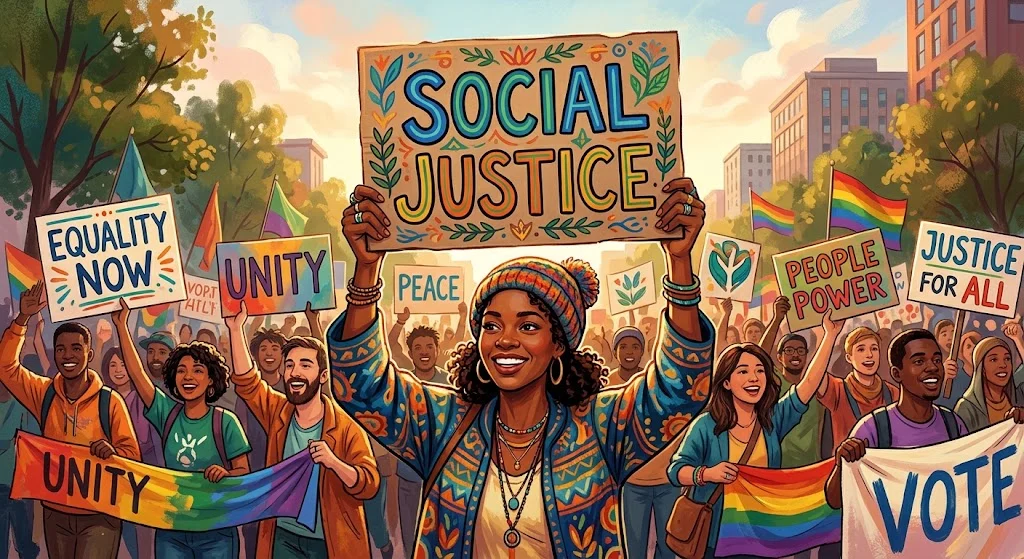
SJW meaning is “social justice warrior,” a term used for someone who strongly advocates for social justice, especially around issues such as equality, discrimination, race, gender, or identity. In modern English, however, the abbreviation is usually critical or mocking, particularly in online and political discussions.
- Quick Answer
- What Does SJW Mean in Simple English?
- SJW Pronunciation and Part of Speech
- What Is a Social Justice Warrior?
- Why Can SJW Be an Insult?
- Is SJW Always Negative?
- How SJW Is Used Online
- Examples of SJW in Sentences
- Formal vs. Informal: When Should You Use It?
- Common Mistakes to Avoid
- 1. Treating SJW as automatically neutral
- 2. Assuming every progressive person is an SJW
- 3. Using SJW in formal writing without explanation
- 4. Confusing the label with an objective fact
- SJW vs. Activist vs. Advocate
- SJW and “Woke”: Are They the Same?
- The History Behind the Term
- Related Words and Expressions
- A Simple Memory Tip
- Frequently Asked Questions
- What does SJW stand for?
- What is the basic SJW meaning?
- Is SJW a bad word?
- Is SJW an acronym or abbreviation?
- What does SJW mean on social media?
- Can SJW be used positively?
- What is a polite alternative to SJW?
- Is SJW the same as a social justice activist?
- How the Term Changes With Context
- Is SJW Always Used as an Insult?
- SJW Meaning in Social Media Conversations
- SJW vs. Social Justice Advocate
- SJW vs. Woke
- Common Situations Where SJW Appears
- Online Arguments
- Political Commentary
- Satire and Humor
- Quoting Someone Else
- Common Mistakes With the Term
- Mistake 1: Assuming It Means “Activist”
- Mistake 2: Treating the Label as an Objective Description
- Mistake 3: Using It in Formal Writing Without Context
- Mistake 4: Thinking Every Social-Justice Supporter Is an SJW
- How to Use SJW Naturally in a Sentence
- A Quick Cheat Sheet
- Final Thoughts
That tone matters. Calling someone an SJW isn’t simply the same as calling them an activist. Depending on the speaker and context, it can suggest that the person is excessively passionate, performative, or unreasonable about progressive causes.more information:-obliterated meaning or nimrod meaning .
Quick Answer
| Term | Meaning | Typical tone | Example |
|---|---|---|---|
| SJW | Abbreviation for social justice warrior | Often disapproving | “He called the commenter an SJW.” |
| Social justice warrior | Someone strongly associated with social-justice advocacy | Often critical today | “She was described as a social justice warrior.” |
| SJW activist | A person framed as aggressively advocating progressive causes | Usually negative | “The article criticized what it called SJW activism.” |
What Does SJW Mean in Simple English?
The simplest SJW meaning is a person who advocates strongly for social justice, but modern usage adds an important layer of attitude.
Merriam-Webster describes the abbreviation as a noun that is often disparaging and associates it with someone perceived as promoting progressive or liberal ideals to an unreasonable or extreme degree. Cambridge likewise labels the abbreviation disapproving and explains that it can be used insultingly for someone who frequently comments on perceived sexism, racism, unfairness, and similar issues.
So, there are really two things to understand:
- Literal idea: someone strongly concerned with social justice.
- Modern connotation: someone portrayed as excessively or aggressively focused on progressive social issues.
The second sense is especially common in internet arguments and political commentary.
SJW Pronunciation and Part of Speech
SJW is an abbreviation and is also used as a noun.
It is normally pronounced by saying the letters individually:
IPA: /ˌes.dʒeɪˈdʌbəl.juː/
Simple pronunciation: ess-jay-double-you
Cambridge lists the same basic pronunciation for both US and UK English.
The plural is usually SJWs, as in:
“Several SJWs criticized the policy online.”
The full expression is social justice warrior, and its plural is social justice warriors.
What Is a Social Justice Warrior?
A social justice warrior is generally described as someone who actively supports causes connected with social equality and fairness. These can include racial equality, gender equality, LGBTQ+ rights, feminism, multiculturalism, and other progressive causes.
However, the phrase has developed a strongly pejorative sense in modern usage. Collins describes the expression as usually derogatory and refers to someone who campaigns zealously for causes associated with social justice.
That means context is essential.
Compare these two sentences:
“She has spent years campaigning for equal rights.”
This is relatively neutral.
“He dismissed her as an SJW.”
This is clearly more judgmental. The second speaker isn’t merely describing her political interests; they’re criticizing how they believe she approaches them.
Why Can SJW Be an Insult?
The SJW meaning often becomes insulting because the abbreviation can imply that someone’s activism is excessive, self-righteous, or more concerned with public approval than practical change.
That implication isn’t necessarily true of the person being labelled. It’s part of the speaker’s characterization.
For example:
“Anyone who disagrees with him gets called an SJW.”
Here, the abbreviation functions as a dismissive label rather than a neutral description.
This is why using the term casually can create conflict. If you simply mean “social justice activist,” activist, advocate, or campaigner is usually clearer and less loaded.
Is SJW Always Negative?
No. This is one of the most important points to understand.
Although modern dictionaries generally identify the common usage as disapproving, the longer expression has also appeared historically in positive or neutral contexts. Merriam-Webster gives an earliest known use of social justice warrior from 1945, while its entry for the abbreviation dates the first known use of SJW in the modern dictionary sense to 2013.
Merriam-Webster also notes that the phrase was once used without the modern mocking implication.
So the meaning has changed over time.
Quick rule: If you see SJW in a modern online argument, assume it may be derogatory unless the surrounding context clearly shows otherwise.
How SJW Is Used Online
The abbreviation became particularly visible in internet and political discussions. It is commonly used in arguments about:
- feminism
- racial equality
- gender and identity
- LGBTQ+ rights
- political correctness
- representation
- discrimination
- diversity
- online activism
For example:
“The video attracted comments from people accusing the creator of being an SJW.”
The sentence doesn’t establish whether the accusation is fair. It simply reports that the label was used.
That’s an important distinction in careful writing: reporting a label isn’t the same as endorsing it.
Examples of SJW in Sentences
Here are natural examples showing different contexts:
- “He was called an SJW after criticizing the company’s advertising.”
The term is being used as a criticism. - “The discussion quickly turned into an argument about SJWs.”
The abbreviation refers broadly to people perceived as social-justice advocates. - “She rejected the SJW label and said she simply wanted equal treatment.”
The speaker distances herself from the label. - “The columnist used SJW as a political insult.”
Here, the negative function is explicit. - “Some activists use the phrase positively, although that usage is less common today.”
This highlights the term’s changing connotations. - “Calling every progressive person an SJW oversimplifies political disagreement.”
The sentence criticizes the broad use of the label.
Formal vs. Informal: When Should You Use It?
SJW is informal and politically charged. It is common in social media, online discussions, commentary, forums, and casual conversation, but it needs care in professional or academic writing.
| Situation | Better choice |
| Casual online conversation | SJW may fit |
| Reporting someone’s exact label | SJW can be appropriate |
| Academic writing | Use social justice advocate or a precise description |
| Neutral journalism | Describe the person’s position rather than applying the label |
| Professional communication | Prefer activist, advocate, or campaigner |
| Quoting or discussing internet language | SJW is appropriate |
If you’re writing objectively, don’t use a loaded label when a more precise description is available.
Common Mistakes to Avoid
1. Treating SJW as automatically neutral
It usually carries a negative or mocking tone in contemporary English. Don’t assume it’s simply another word for activist.
2. Assuming every progressive person is an SJW
The label normally carries an additional judgment about someone’s behavior, intensity, or approach. Supporting equality alone doesn’t establish that characterization.
3. Using SJW in formal writing without explanation
Readers unfamiliar with internet slang may not understand it. If you need the term, write social justice warrior (SJW) at first mention.
4. Confusing the label with an objective fact
Saying “he is an SJW” can present a contested political characterization as fact. In neutral writing, “he was described as an SJW” may be more accurate.
SJW vs. Activist vs. Advocate
These words overlap, but they don’t carry the same tone.
| Word | Main idea | Tone |
| SJW | A person portrayed as excessively focused on social justice | Often negative |
| Activist | Someone who actively works for political or social change | Usually neutral |
| Advocate | Someone who publicly supports a cause or position | Usually neutral/positive |
| Campaigner | Someone who works actively for a particular cause | Usually neutral |
| Ally | Someone who supports a group or cause, especially from outside that group | Usually positive |
If your goal is precision rather than confrontation, activist or advocate will often be the better choice.
SJW and “Woke”: Are They the Same?
Not exactly.
Woke originally referred to awareness of social and racial injustice and later developed broader political meanings. SJW specifically labels a person and often carries the suggestion that their advocacy is excessive or performative.
The terms can overlap in political arguments, but they aren’t interchangeable in every sentence.
For example:
“The company adopted a woke policy.”
Here, woke describes an attitude, policy, or cultural stance.
“The commenter called the manager an SJW.”
Here, SJW labels a person.
The History Behind the Term
The history of SJW meaning is more complicated than its modern internet reputation suggests.
Merriam-Webster records social justice warrior as far back as 1945. The phrase was not originally restricted to an insult; older uses could praise people who worked for social justice.
Its later development was strongly connected to internet culture. By the 2010s, the shortened form became widely associated with criticism of people perceived as overly progressive. Merriam-Webster records 2013 as the first known use of the abbreviation in its current dictionary sense.
This is a good example of semantic change: a phrase can retain its basic subject while its social tone shifts significantly.
Related Words and Expressions
If you’re trying to understand discussions involving this term, these related expressions may help:
- social justice — the idea of fairness and equal rights within society
- activist — someone who actively campaigns for change
- advocate — someone who publicly supports a cause
- progressive — favoring social or political reform
- woke — aware of or concerned with social and political injustice
- political correctness — language or behavior intended to avoid offending or excluding groups
- virtue signaling — behavior perceived as displaying one’s moral values for approval
These terms overlap, but each carries its own nuance. Don’t treat them as perfect synonyms.
A Simple Memory Tip
Think of the abbreviation as:
Social + Justice + Warrior = SJW
The easiest way to remember the modern connotation is:
SJW = social justice warrior, usually a critical label rather than a neutral job description.
If someone uses it about themselves, the intended tone may be different. Always read the surrounding sentence before deciding whether the speaker is being serious, humorous, supportive, or insulting.
Frequently Asked Questions
What does SJW stand for?
SJW stands for social justice warrior. It refers to someone associated with strong advocacy for social-justice causes, although modern usage often carries a critical or mocking tone.
What is the basic SJW meaning?
The basic SJW meaning is a person strongly associated with social-justice activism. In contemporary English, the abbreviation is frequently used disapprovingly to suggest excessive or unreasonable advocacy.
Is SJW a bad word?
SJW isn’t a profanity, but it can be insulting or derogatory. Cambridge and Collins both identify its modern usage as disapproving or derogatory.
Is SJW an acronym or abbreviation?
SJW is commonly described as an abbreviation for social justice warrior. It is pronounced by saying the letters rather than as a single word.
What does SJW mean on social media?
On social media, SJW usually refers to someone portrayed as strongly or aggressively advocating progressive social causes. It often functions as a dismissive political label.
Can SJW be used positively?
Yes, although positive or neutral uses are less common in contemporary English. The full phrase has older uses in which describing someone as a social justice warrior was complimentary.
What is a polite alternative to SJW?
If you want neutral language, use social justice advocate, activist, campaigner, or a specific description of the person’s position. These choices avoid the loaded implication often attached to SJW.
Is SJW the same as a social justice activist?
Not quite. An activist is a neutral term for someone who actively works for change, while SJW often adds a judgment that the person’s advocacy is excessive, performative, or unreasonable.
SJW Meaning: Tone, Context, and Everyday Usage
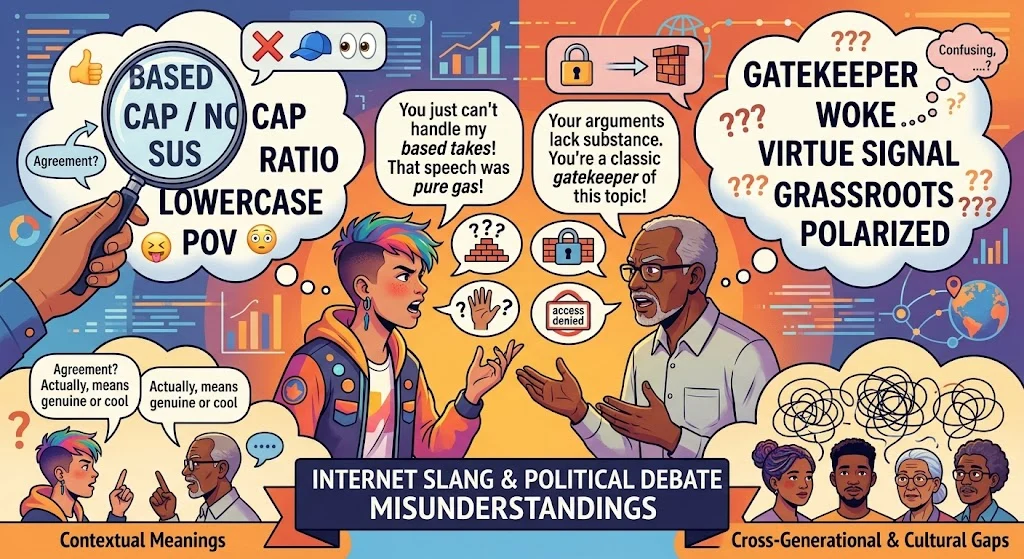
Understanding SJW meaning becomes much easier once you look at how the term works in real conversations. The phrase social justice warrior can describe a person who strongly supports social-justice causes, but it is often used by critics rather than by the people being described.
That difference between literal meaning and implied meaning is the key to using the term correctly.
How the Term Changes With Context
The meaning of SJW can shift depending on who says it, why they say it, and what they are discussing.
Consider these examples:
“She considers herself a social justice warrior.”
Here, the phrase may be positive or self-descriptive.
“He called his opponent an SJW.”
Here, the abbreviation is much more likely to be dismissive.
“The article examines the rise of SJW culture online.”
In this example, the writer is discussing a broader cultural idea rather than necessarily insulting one particular person.
So, when you see SJW meaning discussed online, don’t look only at the dictionary definition. Tone and context matter just as much.
Is SJW Always Used as an Insult?
No. The term isn’t inherently a swear word, and it can occasionally be used neutrally or positively.
Still, contemporary usage is frequently disapproving. Major dictionaries describe the modern abbreviation as a term that can be derogatory or disparaging. That’s why calling someone an SJW may sound confrontational even when the speaker is simply trying to describe their political views.
A useful rule is:
If you want to describe someone’s beliefs neutrally, don’t automatically use SJW.
Instead, choose a word that tells the reader exactly what the person does.
For example:
- activist — someone who actively campaigns for change
- advocate — someone who publicly supports a cause
- campaigner — someone actively working toward a particular goal
- social justice advocate — a more specific but generally neutral description
- progressive — someone whose political or social views generally favor reform
These alternatives don’t automatically suggest that the person is unreasonable or performative.
SJW Meaning in Social Media Conversations
Social media has played a major role in making SJW familiar to English-speaking internet users.
The abbreviation can appear in arguments about:
- feminism
- racism and racial equality
- gender
- LGBTQ+ rights
- political correctness
- diversity
- representation
- discrimination
- cultural debates
- freedom of speech
For example:
“The post was criticized by people who accused the writer of being an SJW.”
The sentence reports an accusation. It doesn’t establish that the writer actually behaved in the way the label suggests.
This distinction is useful for journalists, students, and anyone writing objectively. A politically charged label can tell you how one person views another person, but it doesn’t necessarily provide an unbiased description.
SJW vs. Social Justice Advocate
These expressions can refer to similar subject matter, but their connotations are different.
| Expression | What it suggests | Typical tone |
|---|---|---|
| SJW | Someone portrayed as excessively focused on social justice | Often negative |
| Social justice advocate | Someone who supports social-justice causes | Usually neutral |
| Activist | Someone who actively campaigns for change | Neutral |
| Advocate | Someone who publicly supports a cause | Neutral to positive |
| Campaigner | Someone actively working for a cause | Usually neutral |
If you’re writing an essay, report, or professional document, social justice advocate is normally a clearer choice when you don’t intend criticism.
If you’re discussing internet language itself, however, SJW may be exactly the right term.
SJW vs. Woke
People sometimes use SJW and woke as if they mean exactly the same thing. They don’t.
Woke can describe a person’s awareness, attitude, language, policy, or cultural position concerning social and political issues.
SJW, by contrast, is primarily a label for a person.
Compare:
“The company introduced a woke advertising campaign.”
Here, woke describes an approach or perceived cultural stance.
“Critics called the campaign manager an SJW.”
Here, SJW is being applied to a person.
The two expressions can appear together in political arguments, but they have different grammatical roles and connotations.
Common Situations Where SJW Appears
You’ll most often encounter SJW in informal or highly opinionated communication.
Online Arguments
“He accused everyone who disagreed with him of being an SJW.”
The word is being used as a criticism.
Political Commentary
“The commentator argued that SJW politics had influenced the debate.”
Here, the writer is discussing a political viewpoint or movement.
Satire and Humor
People sometimes use the term sarcastically:
“Apparently I’m an SJW now because I asked for equal treatment.”
The speaker may be joking about being given the label.
Quoting Someone Else
“The reviewer described the character as an SJW.”
This can be useful when accurately reporting another person’s wording without endorsing it.
Common Mistakes With the Term
Mistake 1: Assuming It Means “Activist”
An activist can support almost any social or political cause. SJW has a narrower and more politically loaded implication.
Mistake 2: Treating the Label as an Objective Description
Calling someone an SJW can express the speaker’s judgment. In neutral reporting, phrases such as “was described as an SJW” make that distinction clearer.
Mistake 3: Using It in Formal Writing Without Context
Academic and professional readers may interpret the abbreviation as informal or politically charged. Spell out social justice warrior on first use if the term is necessary.
Mistake 4: Thinking Every Social-Justice Supporter Is an SJW
Supporting equality or opposing discrimination doesn’t automatically make someone an SJW. The modern label often contains an additional judgment about the person’s style, intensity, or behavior.
How to Use SJW Naturally in a Sentence
If you’re using the term in casual writing, these patterns sound natural:
- call someone an SJW
- accuse someone of being an SJW
- describe someone as an SJW
- criticize SJWs
- the term SJW
- SJW culture
- SJW politics
- SJW rhetoric
Examples:
“The commenter called her an SJW.”
“He was accused of using SJW as a political insult.”
“The podcast discussed how the term SJW developed online.”
Notice that these constructions don’t require the writer to agree with the label.
A Quick Cheat Sheet
When you encounter SJW meaning in a conversation, ask three questions:
- Who is using the term?
- Are they describing someone or criticizing them?
- Would a neutral word such as activist or advocate be more precise?
If the answer to the third question is yes, choose the neutral alternative.
| If you mean… | Use… |
| A person campaigning for social change | activist |
| Someone supporting a cause | advocate |
| Someone campaigning publicly | campaigner |
| Someone described critically for aggressive social-justice advocacy | SJW |
| The full expression | social justice warrior |
koi chota final thought bana do or link nahi lagana
Final Thoughts
SJW means “social justice warrior” and is often used online as a critical or mocking label for someone strongly involved in social-justice issues. If you want a neutral tone, activist or advocate is usually a better choice.