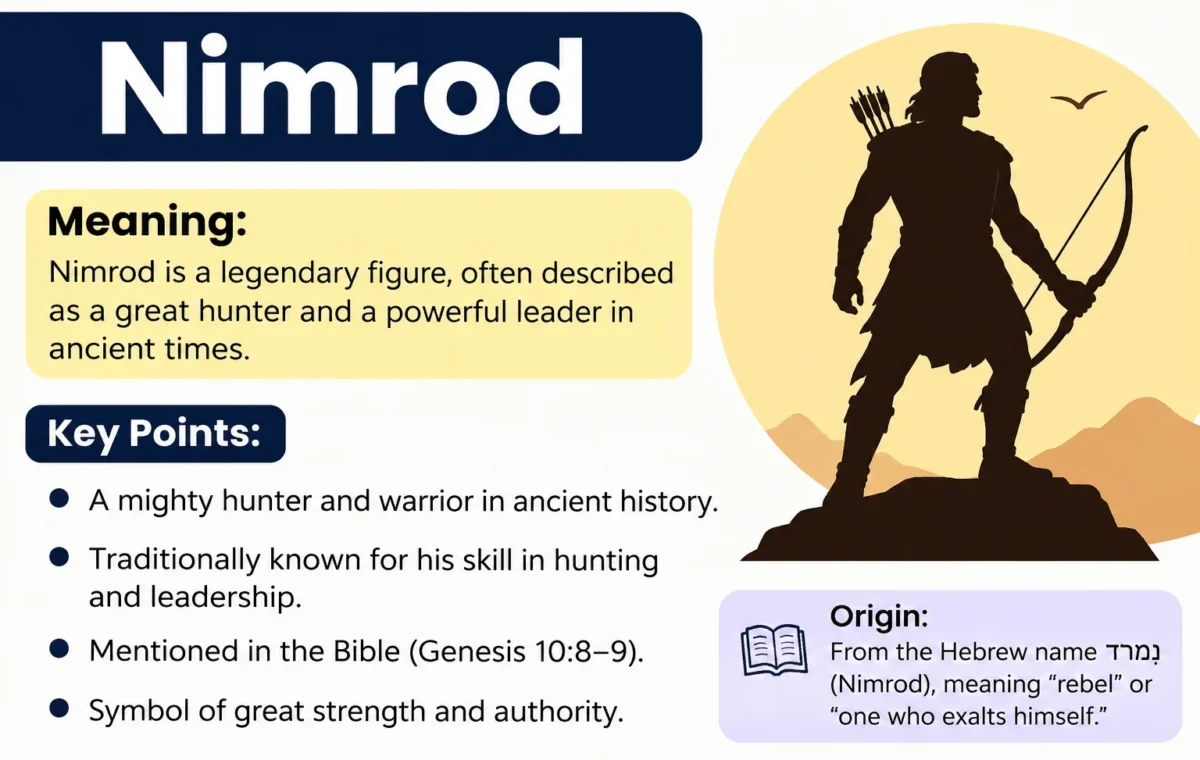
The nimrod meaning today is usually “a foolish, stupid, or inept person,” especially in informal American English. But the word has an older, very different sense: Nimrod is a biblical figure described as a mighty hunter, and nimrod can also refer to a hunter. That contrast is what makes this word so interesting. If you’ve heard someone call another person a “nimrod,” you’re probably hearing a mild-to-moderate insult, often with a joking or sarcastic tone. MORE information:-holding space meaning or energized .
- Quick Answer: Nimrod at a Glance
- What Does Nimrod Mean?
- The Two Main Senses
- Nimrod Meaning in Modern English
- How Do You Pronounce Nimrod?
- Examples of Nimrod in a Sentence
- Is Nimrod an Insult?
- Nimrod Origin: From Hunter to Insult
- Biblical Nimrod and the Older Sense
- Formal vs. Informal: When Should You Use It?
- Nimrod Synonyms and Near-Synonyms
- Common Collocations and Patterns
- Common Mistakes to Avoid
- Mistake 1: Assuming It Always Means “Hunter”
- Mistake 2: Saying Bugs Bunny Invented the Word
- Mistake 3: Using It in Formal Criticism
- Mistake 4: Confusing the Name With the Common Noun
- Related Words and Expressions
- Quick Memory Tip
- Is the Word Still Used?
- Frequently Asked Questions
- What is the nimrod meaning in simple English?
- Is nimrod a bad word?
- Is Nimrod a biblical name?
- Why does nimrod mean idiot?
- What is a synonym for nimrod?
- Can I use nimrod in formal writing?
- What is the difference between Nimrod and nimrod?
- Is nimrod still used today?
- Final Thoughts
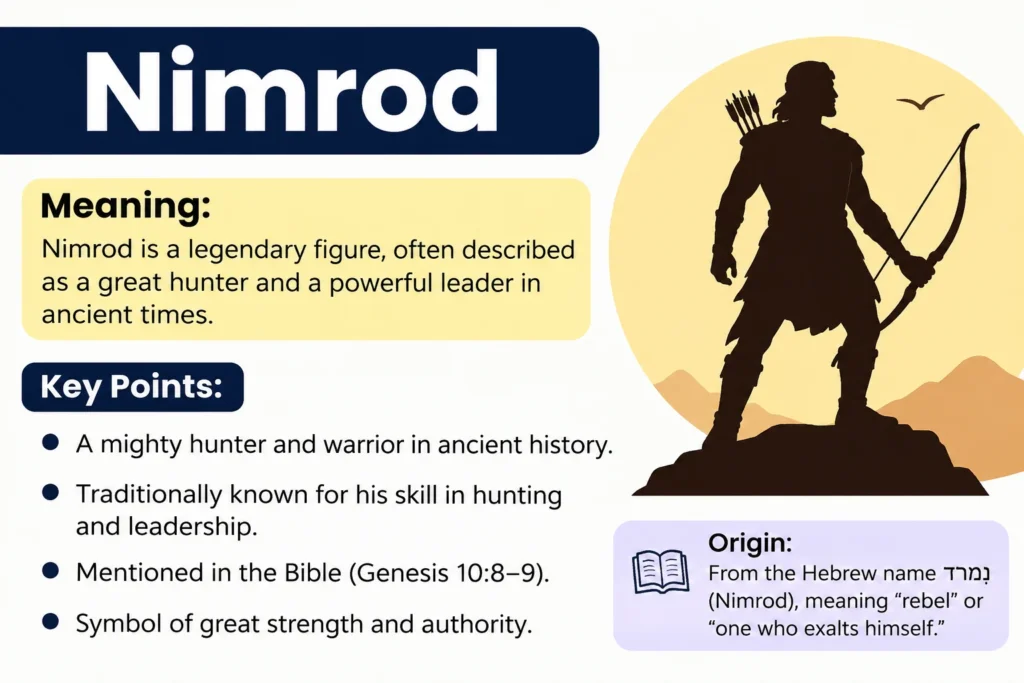
Quick Answer: Nimrod at a Glance
| Feature | Answer |
|---|---|
| Part of speech | Noun |
| Modern meaning | A foolish, stupid, or inept person |
| Older meaning | A hunter, especially a skilled one |
| Pronunciation | UK /ˈnɪm.rɒd/, US /ˈnɪm.rɑːd/ |
| Register | Informal; often humorous or disparaging |
| Common context | Casual speech, jokes, criticism, popular culture |
What Does Nimrod Mean?
In modern informal English, a nimrod is a person who seems foolish, incompetent, or annoyingly unaware. Cambridge defines the modern US informal noun as a “very stupid person.”
The older sense is completely different. A capitalized Nimrod is the biblical name of a figure associated with being a mighty hunter. Dictionary sources also record nimrod as a term for a hunter.
The Two Main Senses
- A foolish or inept person — the modern informal sense.
- A hunter — the older sense connected with the biblical figure.
That split explains why the word can sound strangely out of place in older writing. A historical text may use it as praise for a hunter, while a modern conversation may use it as an insult.
Nimrod Meaning in Modern English
The modern nimrod meaning is generally negative, but it isn’t always severe. Someone might say, “You nimrod, you forgot your keys again!” with irritation, yet the same sentence could be playful between friends.
Tone does most of the work. A speaker who uses a light voice may be teasing. A speaker who says the word sharply during an argument is clearly being insulting.
In professional writing, it’s usually better to choose a precise alternative such as incompetent, careless, or misguided, depending on what you actually mean.
How Do You Pronounce Nimrod?
The standard pronunciation is:
- US: /ˈnɪm.rɑːd/
- UK: /ˈnɪm.rɒd/
- Simple pronunciation: NIM-rod
The first syllable receives the stress: NIM-rod. Don’t overcomplicate it; it sounds much like the biblical name.
Examples of Nimrod in a Sentence
Here are natural examples showing the modern sense:
- “That nimrod left the refrigerator door open all night.”
- “I felt like a nimrod after sending the email to the wrong person.”
- “Don’t be a nimrod—check the instructions before you start.”
- “The team was frustrated by the nimrod who kept ignoring the safety rules.”
- “He called himself a genius, but everyone else thought he was a nimrod.”
An example of the older hunting sense would be:
- “The seasoned nimrod knew exactly where to look for tracks.”
That last use sounds old-fashioned or literary compared with the modern insult.
Is Nimrod an Insult?
Yes. In its modern sense, nimrod is an insult, but it is usually a relatively mild one. It often expresses annoyance, ridicule, or disbelief rather than serious hostility.
Compare these choices:
| Word | Tone | Typical effect |
| Nimrod | Informal, mocking | Mildly insulting; sometimes humorous |
| Fool | Direct | Says someone acted unwisely |
| Idiot | Stronger | More openly insulting |
| Dummy | Casual | Often playful |
| Doofus | Humorous | Light and teasing |
| Incompetent | Formal | Criticizes ability rather than intelligence |
If you want to criticize someone’s action without attacking the person, careless, unprepared, or incompetent may be better choices.
Nimrod Origin: From Hunter to Insult
The story behind the nimrod origin is one of English’s more curious semantic changes. The name comes from the biblical Nimrod, who is described in Genesis as a mighty hunter. English later used Nimrod as a reference to a great hunter.
The insulting sense appeared before the famous cartoon explanation is often given. Historical evidence includes negative uses from the early twentieth century, so it isn’t accurate to claim that a cartoon single-handedly invented the insult.
However, Looney Tunes helped popularize the modern sense. In the 1948 cartoon What Makes Daffy Duck, Daffy Duck calls Elmer Fudd “my little Nimrod,” creating an ironic contrast between the famous mighty hunter and the hapless cartoon hunter. Bugs Bunny also used the term in a later cartoon.
So the safest explanation is this: the insult has earlier evidence, while the cartoons likely helped make the usage widely recognizable.
Biblical Nimrod and the Older Sense
The biblical Nimrod appears in Genesis 10:8–9 and is described as a mighty man and hunter. The name became associated in English with hunting and, at times, with an impressive or skilled hunter.
This historical sense survives today, but it is uncommon in ordinary conversation. If you call someone a nimrod without context, most modern American readers will probably interpret it as “fool” rather than “expert hunter.”
For background on the biblical figure and the modern definition, consult a reputable dictionary.
Formal vs. Informal: When Should You Use It?
Nimrod is primarily informal. It can work in:
- casual conversations
- humorous dialogue
- jokes and teasing
- informal fiction
- commentary about someone’s foolish behavior
Avoid it in formal reports, academic papers, workplace evaluations, and professional criticism unless you’re discussing the word itself.
For example, instead of writing, “The manager is a nimrod,” a professional report should say, “The manager made several serious errors.” The second version identifies the problem without relying on a personal insult.
Nimrod Synonyms and Near-Synonyms
The best synonym depends on the exact shade of meaning:
- Fool — someone who acts unwisely.
- Idiot — a stronger, more direct insult.
- Dummy — informal and often playful.
- Doofus — humorous and mildly insulting.
- Dunce — traditionally suggests poor understanding or learning.
- Dullard — emphasizes slowness or lack of intelligence.
- Blockhead — informal and old-fashioned sounding.
- Nincompoop — comic and deliberately silly.
- Incompetent — focuses on poor ability rather than intelligence.
Don’t automatically replace the term with stupid. If the original sentence is teasing, doofus or dummy may preserve the tone better.
Common Collocations and Patterns
You may encounter patterns such as:
- a complete nimrod
- that nimrod
- you nimrod
- such a nimrod
- call someone a nimrod
- look like a nimrod
These combinations usually signal the modern insulting sense. Capitalization can also help: Nimrod often points to the biblical name, while lowercase nimrod commonly signals the slang noun.
Common Mistakes to Avoid
Mistake 1: Assuming It Always Means “Hunter”
That is historically understandable, but modern readers may hear an insult instead. Context is essential.
Mistake 2: Saying Bugs Bunny Invented the Word
The cartoons helped popularize the insult, but evidence for negative usage predates the best-known cartoon references. Treat the cartoon story as part of the word’s popular history, not the entire origin.
Mistake 3: Using It in Formal Criticism
It sounds informal and personal. In professional writing, describe the specific behavior or problem instead.
Mistake 4: Confusing the Name With the Common Noun
Nimrod with a capital letter is the biblical name. Lowercase nimrod is commonly the modern noun meaning a foolish or inept person.
Related Words and Expressions
If you’re studying vocabulary around this term, these words are useful comparisons:
- nincompoop — a silly or stupid person, often with a comic tone.
- dunce — someone regarded as slow to understand or learn.
- dolt — a stupid person; often disapproving.
- simpleton — someone lacking ordinary reasoning ability; somewhat old-fashioned.
- knucklehead — a foolish person, especially in informal American English.
These aren’t perfect substitutes. Each carries its own level of humor, age, and sharpness.
Quick Memory Tip
Think of Nimrod = hunter in the Bible, fool in modern slang.
The easiest way to remember the change is the contrast: a “mighty hunter” became an ironic label for someone who isn’t very clever or capable. That historical twist is also why the term has a slightly comic sound today.
Is the Word Still Used?
Yes. The modern slang sense remains recognizable, particularly in American English, although it isn’t among the most common insults. It often appears in humorous speech, fictional dialogue, and casual online writing.
Because it can sound playful, a speaker may choose it instead of a harsher insult. Still, the listener’s age, region, and familiarity with the word can affect how it is understood.
Frequently Asked Questions
What is the nimrod meaning in simple English?
The nimrod meaning in modern informal English is a foolish, stupid, or inept person. It is usually mildly insulting and can also be humorous.
Is nimrod a bad word?
It isn’t profanity, but it is a disparaging word when used for a foolish person. In friendly conversation it can be teasing, while in an argument it may sound insulting.
Is Nimrod a biblical name?
Yes. Nimrod is a biblical figure described in Genesis as a mighty hunter. The personal name is the source of the older English hunting sense.
Why does nimrod mean idiot?
The exact path isn’t completely certain. The insulting sense existed before the famous Looney Tunes references, while cartoons featuring Elmer Fudd as a hunter helped popularize the ironic use.
What is a synonym for nimrod?
Depending on tone, possible synonyms include fool, dummy, doofus, dolt, dunce, and nincompoop. Idiot is generally stronger.
Can I use nimrod in formal writing?
Usually, no. It is informal and disparaging, so formal writing normally benefits from a more precise description of the person’s behavior or performance.
What is the difference between Nimrod and nimrod?
Nimrod with a capital letter is the biblical name. Lowercase nimrod is commonly the modern noun meaning a foolish or inept person.
Is nimrod still used today?
Yes, especially in informal American English. It is less common than words such as idiot or fool, but readers familiar with the term can understand its insulting sense.
Final Thoughts
The nimrod meaning shows how fascinating language can be: a word once connected with a mighty hunter gradually developed a humorous modern sense for a foolish or inept person. Today, nimrod is usually informal and mildly insulting, so context and tone matter. For more vocabulary insights, explore other SmartWording word guides and discover how everyday language changes over time.