What Does Mown Mean in English Grammar.Mown is the past participle of the verb “mow.” It means that grass, crops, or another area of vegetation has been cut, usually with a machine, tool, or blade. In English grammar, “mown” is most commonly used with auxiliary verbs such as “have,” “has,” or “had,” and in passive constructions with “be.”
- What Is the Meaning of Mown?
- What Part of Speech Is Mown?
- Mow, Mowed, and Mown
- Mow
- Mowed
- Mown
- What Does Mown Mean in a Sentence?
- Mown as a Past Participle
- Is Mown Past Tense?
- Mown in British English
- Mown in American English
- Examples of Mown
- What Does Freshly Mown Mean?
- Mown as an Adjectival Form
- Mown vs. Cut
- Mown vs. Mowed
- Common Grammar Mistakes With Mown
- How to Remember Mown
- Frequently Asked Questions
- What does mown mean in English grammar?
- Is mown past tense?
- Can I say “I have mown the lawn”?
- Is mown British or American English?
- What does freshly mown mean?
- Is “mowed” also correct?
- How Mown Works in English Grammar
- Mown in Perfect Tenses
- Mown in the Present Perfect
- Mown in the Past Perfect
- Mown in Passive Sentences
- Mown as a Descriptive Word
- What Does Freshly Mown Grass Mean?
- Mown in British English Grammar
- Mown in American English Grammar
- Mown vs. Mowed: A Simple Comparison
- Why Do English Speakers Use Both Mown and Mowed?
- Common Questions About Mown
- What does mown mean in English grammar?
- Can mown be used after “have”?
- Is “I mown the lawn” correct?
- Is “I have mown the lawn” correct?
- Is “I have mowed the lawn” also correct?
- What Does Mown Mean in English Grammar in Different Sentence Structures?
- Mown With Have, Has, and Had
- Mown in Passive Voice
- What Does Mown Mean in Descriptive English?
- What Does Freshly Mown Mean?
- Mown vs. Mowed in Grammar
- What Does Mown Mean in British English?
- What Does Mown Mean in American English?
- Examples Using Mown Correctly
- Common Mistakes With Mown
- How to Remember the Forms
- Why Mown Is Sometimes Confusing
- Mown in Everyday English
- Frequently Asked Questions
- What does mown mean in English grammar?
- Is mown the past tense of mow?
- Can I say “I have mown the lawn”?
- Can I say “I have mowed the lawn”?
- What does freshly mown grass mean?
- Final Thoughts
For example:
“The lawn has been mown.”
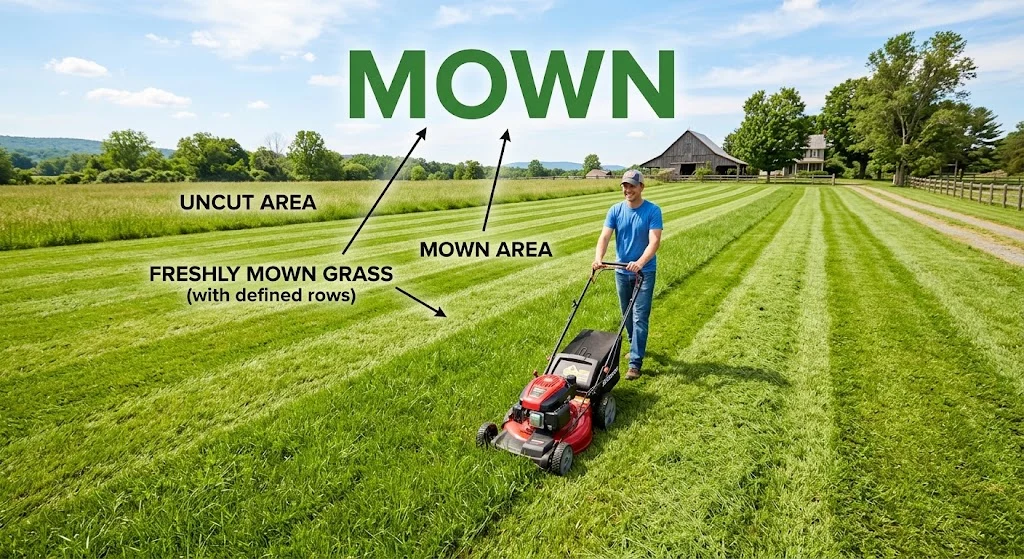
Here, mown tells us that someone has already cut the grass.MORE insights information:-sin of pride .
What Is the Meaning of Mown?
The word mown means “cut with a mower or by mowing.”
It comes from the verb “mow,” which means to cut grass, grain, or similar vegetation.
Examples:
- “The grass has been mown.”
- “The field was freshly mown.”
- “The farmer had mown the meadow before sunset.”
In each sentence, mown describes vegetation that has been cut.
What Part of Speech Is Mown?
Mown is a verb form.
More specifically, mown is traditionally the past participle of “mow.”
The main forms of the verb are:
- Base form: mow
- Present participle: mowing
- Past tense: mowed
- Past participle: mown or mowed, depending on the variety and usage
The form mown is especially common in British English and is also recognized in other varieties of English.
Mow, Mowed, and Mown
Understanding the difference between these forms is important.
Mow
Mow is the base form.
Example:
“I mow the lawn every Saturday.”
Mowed
Mowed is the simple past form.
Example:
“I mowed the lawn yesterday.”
“Mowed” can also be used as a past participle, particularly in American English.
Example:
“I have mowed the lawn already.”
Mown
Mown is traditionally used as the past participle.
Example:
“I have mown the lawn.”
It can also appear in passive constructions:
“The lawn was mown yesterday.”
This distinction explains why learners sometimes ask what does mown mean in English grammar. The word is not simply another way of saying “mowed” in every sentence; its grammatical role matters.
What Does Mown Mean in a Sentence?
The meaning of mown depends on what is being described, but it normally indicates that vegetation has been cut.
For example:
“The freshly mown grass smelled wonderful.”
Here, freshly mown means that the grass had recently been cut.
Another example:
“The field had been mown before the rain arrived.”
The phrase had been mown is a past perfect passive construction.
It tells us that the cutting happened before another event in the past.
Mown as a Past Participle
A past participle is a verb form used in several grammatical structures.
Mown can be used with “have,” “has,” or “had” to form perfect constructions.
Examples:
- “I have mown the lawn.”
- “She has mown the garden.”
- “They had mown the field before noon.”
Mown can also be used with forms of “be” in passive constructions:
- “The lawn was mown yesterday.”
- “The field has been mown.”
- “The grass had been mown before the guests arrived.”
These constructions are important when understanding what does mown mean in English grammar.
Is Mown Past Tense?
No. Mown is traditionally the past participle of “mow,” not the simple past tense.
The simple past form is “mowed.”
Correct:
“I mowed the lawn yesterday.”
Also correct:
“I have mown the lawn.”
The first sentence uses the simple past. The second uses the past participle.
A common mistake is to say:
“I mown the lawn yesterday.”
This is incorrect in standard English because “mown” normally cannot function as the simple past form.
The correct sentence is:
“I mowed the lawn yesterday.”
Mown in British English
Mown is especially familiar in British English.
For example:
“The gardener has mown the lawn.”
British English commonly preserves the traditional distinction between “mowed” as the past tense and “mown” as the past participle.
You may also see:
“The lawn has been mown.”
This sounds completely natural in British English.
Mown in American English
American English commonly uses “mowed” as both the simple past and past participle.
For example:
“I mowed the lawn yesterday.”
“I have mowed the lawn already.”
However, “mown” is still understandable and may appear in literary, formal, regional, or fixed descriptive expressions.
Therefore, neither form should automatically be treated as meaningless or incorrect. Usage varies according to dialect and context.
Examples of Mown
Here are some natural examples:
- “The lawn was freshly mown.”
- “The farmer has mown the field.”
- “The grass had been mown before the picnic began.”
- “We walked across the freshly mown meadow.”
- “The gardener had mown the grass early in the morning.”
- “The field was neatly mown and ready for the event.”
What Does Freshly Mown Mean?
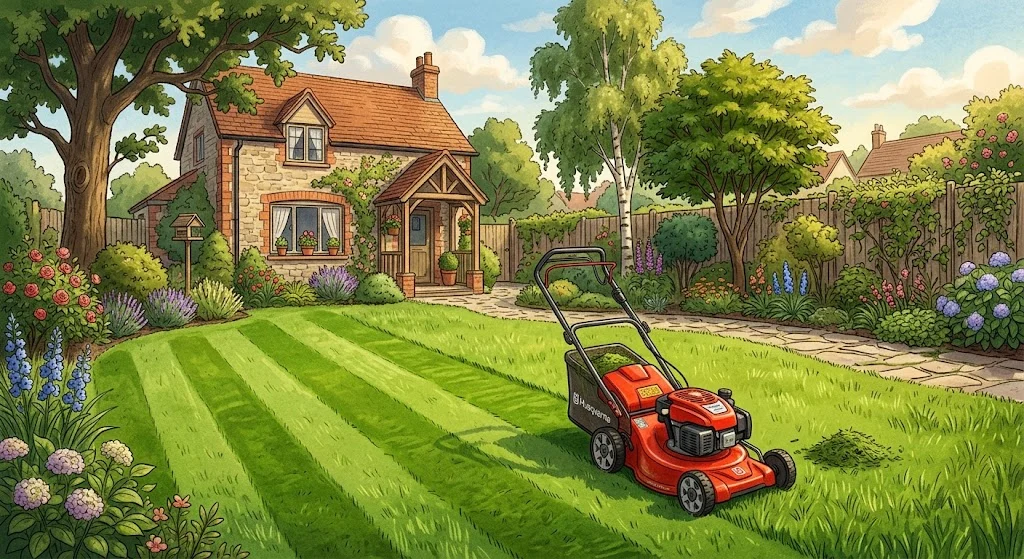
Freshly mown means recently cut, usually referring to grass, a lawn, or a field.
For example:
“The freshly mown lawn looked neat and green.”
This means the lawn had recently been cut.
The expression “freshly mown grass” is also commonly associated with the smell that follows grass being cut.
Example:
“We could smell freshly mown grass from the garden.”
Mown as an Adjectival Form
Although mown is a verb form, it can function adjectivally when it describes a noun.
For example:
“The mown grass was still damp.”
Here, mown describes the grass.
Similarly:
“They walked across the mown field.”
The word identifies the field as one that has been cut.
This use is sometimes described as a participial adjective because the past participle is functioning descriptively.
Mown vs. Cut
Mown and cut are related, but they are not always interchangeable.
“Mown” specifically relates to mowing vegetation.
For example:
“The lawn was mown.”
“Cut” is much broader.
For example:
“The paper was cut.”
You would not normally say:
“The paper was mown.”
Therefore, mown is appropriate when talking about grass, crops, lawns, meadows, and similar vegetation that is cut by mowing.
Mown vs. Mowed
Mown and mowed can both relate to the cutting of grass, but their grammatical use can differ.
Traditional usage:
“I mowed the lawn.”
“I have mown the lawn.”
In the first sentence, mowed is the simple past.
In the second sentence, mown is the past participle.
American English frequently uses “mowed” in both positions:
“I mowed the lawn.”
“I have mowed the lawn.”
This is why both forms may appear in dictionaries and real-world English.
Common Grammar Mistakes With Mown
One common mistake is using mown as the simple past:
Incorrect:
“I mown the grass yesterday.”
Correct:
“I mowed the grass yesterday.”
Another mistake is assuming that mown must be used after “have.”
Traditional form:
“I have mown the lawn.”
But “I have mowed the lawn” is also standard, especially in American English.
The correct choice can therefore depend on the variety of English being used.
How to Remember Mown
A simple way to remember mown is:
Mow → present
Mowed → simple past
Mown → traditional past participle
For example:
“I mow the lawn every week.”
“I mowed the lawn yesterday.”
“I have mown the lawn.”
This pattern helps English learners understand the grammatical difference.
Frequently Asked Questions
What does mown mean in English grammar?
Mown is traditionally the past participle of “mow.” It means cut, especially when referring to grass, crops, lawns, or other vegetation.
Is mown past tense?
No. Mown is traditionally the past participle. The simple past form is “mowed.”
Can I say “I have mown the lawn”?
Yes. “I have mown the lawn” is grammatically correct, particularly in British English and traditional usage.
Is mown British or American English?
Mown is especially common in British English. American English often uses “mowed” as both the simple past and past participle.
What does freshly mown mean?
Freshly mown means recently cut, usually referring to grass, a lawn, or a field.
Is “mowed” also correct?
Yes. “Mowed” is the standard simple past form and is also widely used as a past participle, especially in American English.
What Does Mown Mean in English Grammar? — Part 2
How Mown Works in English Grammar
To understand what does mown mean in English grammar, it helps to look at the role of the word in a sentence. Mown is the traditional past participle of “mow,” so it usually appears with another verb or functions as a descriptive participle.
For example:
“The gardener has mown the lawn.”
Here, “has” is the auxiliary verb and “mown” is the past participle.
Another example is:
“The lawn was mown yesterday.”
In this sentence, “was” combines with “mown” to create a passive construction.
These examples show why mown normally does not work alone as the simple past tense.
Mown in Perfect Tenses
One important use of mown is in perfect constructions.
The perfect aspect uses forms of “have” together with a past participle. Since mown is a past participle, it can follow “have,” “has,” or “had.”
Examples:
- “I have mown the lawn.”
- “She has mown the grass.”
- “They had mown the field before the storm.”
- “We have already mown the meadow.”
In each sentence, mown indicates that the cutting action has been completed in relation to another time or event.
Mown in the Present Perfect
The present perfect combines “has” or “have” with the past participle.
For example:
“The gardener has mown the lawn.”
This tells us that the lawn-cutting action has been completed and is relevant to the present situation.
Another example:
“They have mown the field.”
The exact time of the action is not necessarily stated. The focus is on the completed action or its present result.
Mown in the Past Perfect
The past perfect uses “had” plus the past participle.
For example:
“The workers had mown the grass before the guests arrived.”
The sentence describes two past events. First, the grass was mown. Later, the guests arrived.
Another example:
“She had mown the lawn before the rain started.”
Again, mown forms part of the past perfect construction.
Mown in Passive Sentences
Mown is also common in passive constructions.
For example:
“The lawn was mown yesterday.”
The sentence focuses on the lawn rather than the person who performed the action.
Other examples include:
- “The grass was freshly mown.”
- “The field has been mown.”
- “The meadow had been mown before the festival.”
- “The lawn will have been mown by tomorrow.”
In these sentences, mown is part of a passive verb construction.
Mown as a Descriptive Word
Sometimes mown describes a noun rather than functioning as the main part of a verb phrase.
For example:
“The children played on the freshly mown grass.”
Here, freshly mown describes the grass.
Similarly:
“They crossed a neatly mown field.”
The word tells us that the field’s vegetation has been cut.
This is one reason learners may encounter mown outside a conventional verb phrase.
What Does Freshly Mown Grass Mean?
Freshly mown grass is grass that has recently been cut.
For example:
“The garden smelled wonderful after the grass was mown.”
The phrase can describe both the physical condition of the grass and the fact that mowing happened recently.
Other examples include:
- “The freshly mown lawn looked perfectly neat.”
- “We walked across the freshly mown grass.”
- “The smell of freshly mown grass filled the garden.”
The expression is common in descriptive English.
Mown in British English Grammar
In British English, mown is a familiar past participle of “mow.”
A British English speaker may naturally say:
“I have mown the lawn.”
The simple past remains:
“I mowed the lawn yesterday.”
This creates a clear distinction between the simple past and the traditional past participle.
However, actual usage can vary among speakers, so this distinction should not be presented as an absolute rule for every English variety.
Mown in American English Grammar
American English commonly accepts “mowed” as both the simple past and past participle.
For example:
“I mowed the lawn yesterday.”
“I have mowed the lawn already.”
The form mown is still understandable to American English speakers, but it can sound more literary, traditional, or British depending on context.
Therefore, when asking what does mown mean in English grammar, it is useful to consider the variety of English being used.
Mown vs. Mowed: A Simple Comparison
The difference can be remembered with these examples:
Present:
“I mow the lawn.”
Simple past:
“I mowed the lawn.”
Traditional past participle:
“I have mown the lawn.”
Common alternative past participle:
“I have mowed the lawn.”
The first two forms are straightforward. The main variation occurs with the past participle.
Why Do English Speakers Use Both Mown and Mowed?
English contains many verbs with more than one accepted form, and usage can differ across regions and historical periods.
“Mown” preserves a traditional past-participle pattern.
“Mowed” has become widely established as the past participle as well, especially in American English.
This is why both expressions can appear in dictionaries and published writing.
Instead of thinking that one form is always correct and the other is always wrong, consider the grammatical construction and the variety of English.
Common Questions About Mown
What does mown mean in English grammar?
Mown traditionally functions as the past participle of “mow.” It means that grass, crops, or similar vegetation has been cut.
Can mown be used after “have”?
Yes. “Have mown,” “has mown,” and “had mown” are established constructions.
Is “I mown the lawn” correct?
No, not as standard simple past English. The simple past is “I mowed the lawn.”
Is “I have mown the lawn” correct?
Yes. It uses mown as a past participle.
Is “I have mowed the lawn” also correct?
Yes. “Mowed” is also widely used as a past participle, particularly in American English.
What Does Mown Mean in English Grammar in Different Sentence Structures?
If you are still wondering what does mown mean in English grammar, the key is to understand how it behaves in different sentence structures. Mown is traditionally the past participle of “mow,” and it commonly appears with auxiliary verbs or as part of a descriptive phrase.
For example:
- “I have mown the lawn.”
- “The lawn has been mown.”
- “The freshly mown grass looked beautiful.”
Although these sentences look different, mown refers to grass, crops, or vegetation that has been cut.
Mown With Have, Has, and Had
One of the easiest ways to recognize mown is to look for have, has, or had before it.
Examples:
“I have mown the backyard.”
“She has mown the grass.”
“They had mown the field before the rain began.”
These are perfect constructions. The auxiliary verb changes according to the tense and subject, while mown remains the past participle.
This is an important point when learning what does mown mean in English grammar because mown usually does not function as the simple past form.
Mown in Passive Voice
Mown frequently appears in passive sentences.
For example:
“The lawn was mown yesterday.”
“The field has been mown.”
“The grass had been mown before the event.”
In these sentences, the focus is on the grass, lawn, or field rather than the person who performed the mowing.
Compare:
“The gardener mowed the lawn.”
“The lawn was mown by the gardener.”
The first sentence is active. The second is passive.
What Does Mown Mean in Descriptive English?
Mown can also describe something that has already been cut.
For example:
“The children ran across the freshly mown lawn.”
Here, freshly mown describes the condition of the lawn.
Similarly:
“The farmer walked through the mown field.”
The word mown tells us that the vegetation in the field has been cut.
This descriptive use is especially common with words such as:
- Freshly mown
- Newly mown
- Recently mown
- Neatly mown
What Does Freshly Mown Mean?
Freshly mown means recently cut, particularly when talking about grass.
For example:
“The freshly mown grass looked bright and clean.”
This sentence tells us that someone cut the grass recently.
Another example:
“We could smell freshly mown grass from the garden.”
The expression is often used in descriptive writing because freshly cut grass has a distinctive smell and appearance.
Mown vs. Mowed in Grammar
One of the most common questions related to what does mown mean in English grammar is whether mown and mowed are interchangeable.
They can overlap, but their traditional grammatical roles are different.
The simple past is:
“I mowed the lawn yesterday.”
The traditional past participle is:
“I have mown the lawn.”
However, “mowed” is also widely used as a past participle:
“I have mowed the lawn.”
Therefore, both “I have mown the lawn” and “I have mowed the lawn” can be correct, depending on dialect and preferred usage.
What Does Mown Mean in British English?
In British English, mown is a well-established past participle of “mow.”
A British speaker may naturally say:
“I have mown the lawn.”
The simple past remains:
“I mowed the lawn yesterday.”
This distinction is useful for learners who are studying British English or reading British publications.
However, English usage is not completely uniform. Individual speakers may use different forms depending on region, style, and personal preference.
What Does Mown Mean in American English?
American English commonly uses mowed as both the simple past and past participle.
For example:
“I mowed the lawn yesterday.”
“I have mowed the lawn already.”
Mown is still recognizable in American English, but it may sound less common or more traditional to many American speakers.
This regional difference explains why learners may encounter both forms in English books, websites, and conversations.
Examples Using Mown Correctly
Here are several examples that demonstrate different grammatical uses:
- “I have mown the lawn before breakfast.”
- “The gardener has mown the grass.”
- “The field had been mown before the farmers arrived.”
- “We sat beside the freshly mown lawn.”
- “The meadow was freshly mown.”
- “The smell of newly mown grass filled the air.”
- “The lawn had already been mown when we arrived.”
- “The farmer had mown the field before sunset.”
Each example shows how mown can function as a past participle or descriptive participial form.
Common Mistakes With Mown
A frequent mistake is using mown as the simple past.
Incorrect:
“I mown the lawn yesterday.”
Correct:
“I mowed the lawn yesterday.”
Another common mistake is believing that mown is the only possible past participle.
Traditional:
“I have mown the grass.”
Also widely accepted:
“I have mowed the grass.”
The choice can depend on regional English and stylistic preference.
How to Remember the Forms
A simple three-step pattern can help:
Mow → base form
Mowed → simple past
Mown → traditional past participle
For example:
“I mow the lawn every weekend.”
“I mowed the lawn yesterday.”
“I have mown the lawn already.”
Remembering this pattern makes it easier to understand what does mown mean in English grammar.
Why Mown Is Sometimes Confusing
The word can be confusing because English has changed over time and different varieties of English do not always use verb forms in exactly the same way.
A learner may see:
“I have mown the lawn.”
and later encounter:
“I have mowed the lawn.”
Both can be grammatical.
The important thing is to recognize that mown is traditionally a past participle, while mowed is the standard simple past and is also widely accepted as a past participle.
Mown in Everyday English
Although mown is perfectly understandable, everyday English often favors mowed, particularly in American English.
For instance:
“I mowed the grass this morning.”
is natural and common.
In British English, you may also hear:
“I’ve mown the grass this morning.”
Both communicate the same basic action.
When writing for an international audience, either form can be explained clearly rather than treating one as universally superior.
Frequently Asked Questions
What does mown mean in English grammar?
Mown is traditionally the past participle of “mow.” It describes grass, crops, lawns, or similar vegetation that has been cut.
Is mown the past tense of mow?
No. Mowed is the simple past form. Mown is traditionally the past participle.
Can I say “I have mown the lawn”?
Yes. This is grammatically correct and particularly familiar in British English.
Can I say “I have mowed the lawn”?
Yes. Mowed is also widely used as a past participle, especially in American English.
What does freshly mown grass mean?
It means grass that has recently been cut.
Final Thoughts
The answer to what does mown mean in English grammar is straightforward: mown is traditionally the past participle of “mow,” meaning that grass, crops, or other vegetation has been cut.
The most useful distinction is between mowed and mown. Use mowed for the simple past, as in “I mowed the lawn.” Use mown as the traditional past participle, as in “I have mown the lawn.” Remember that “mowed” is also widely accepted as a past participle, particularly in American English.
For broader information about Grammar and how words work within sentences, Wikipedia provides useful background.