What does sous chef mean in a kitchen is a common question for anyone new to restaurant work or curious about kitchen job titles. A sous chef is the second-in-command in a professional kitchen, working directly under the head chef or executive chef to run daily operations, manage staff, and keep service running smoothly. The word “sous” comes from French, meaning “under,” which reflects the role’s position just below the top of the kitchen hierarchy. This guide breaks down the role’s responsibilities, where it fits in a kitchen’s chain of command, the skills it requires, and how someone typically works their way into the position. For more insights, read here:- candid meaning and chinch meaning.
- What Does Sous Chef Mean in a Kitchen: The Direct Answer
- Origin of the Term Sous Chef: What Does Sous Chef Mean in a Kitchen Historically?
- The Sous Chef's Role and Responsibilities
- Sous Chef vs. Executive Chef
- Sous Chef vs. Chef de Cuisine
- Sous Chef vs. Chef de Partie
- Sous Chef Salary and Career Outlook
- How Sous Chefs Communicate During Service
- The Physical and Emotional Demands of the Role
- Sous Chef Training and Certification Options
- International Differences in the Sous Chef Title
- What Does Sous Chef Mean in a Kitchen Hierarchy?
- Skills Needed: What Does Sous Chef Mean in a Kitchen in Practice?
- How Someone Becomes a Sous Chef
- A Day in the Life of a Sous Chef
- Sous Chef in Different Kitchen Settings
- Common Misunderstandings About the Sous Chef Role
- Why the Sous Chef Role Matters
- Frequently Asked Questions
- What does sous chef mean in a kitchen exactly?
- Is a sous chef higher than a line cook?
- Does sous chef mean assistant chef?
- Can a sous chef become an executive chef?
- Is sous chef a French term?
- Do all restaurants have a sous chef?
- Is a sous chef the same in every country?
- What's the biggest misconception about the role, and what does sous chef mean in a kitchen once that misconception is cleared up?
- Conclusion
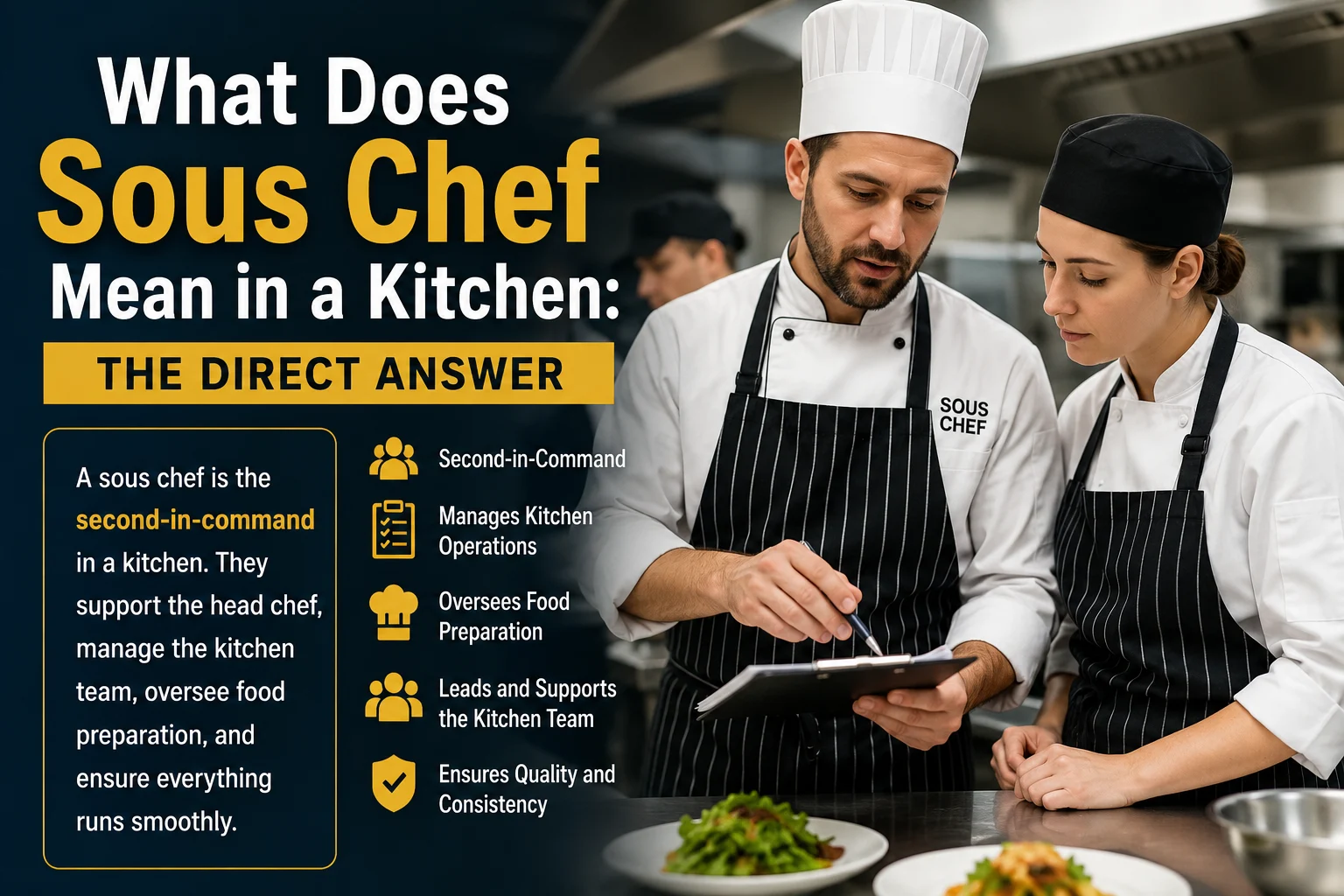
What Does Sous Chef Mean in a Kitchen: The Direct Answer
At its core, the answer to what does sous chef mean in a kitchen is straightforward: it’s a leadership position, second only to the head chef or executive chef. The sous chef supervises line cooks, coordinates food preparation, and often steps in to run the kitchen entirely when the executive chef is unavailable.
This isn’t an entry-level title. A sous chef typically has years of hands-on cooking experience, strong organizational skills, and the ability to lead a team under pressure, especially during a busy dinner service when timing and communication matter most.
The title also carries real authority. When the executive chef is off duty, out sick, or handling other responsibilities, the sous chef is generally the person in charge of the kitchen, making real-time decisions about staffing, food quality, and service pace. This authority is a key part of what does sous chef mean in a kitchen beyond the day-to-day task list.
Origin of the Term Sous Chef: What Does Sous Chef Mean in a Kitchen Historically?
The term comes from the French kitchen brigade system, a structured hierarchy of kitchen roles developed to organize large professional kitchens efficiently. “Sous” is French for “under,” and “chef” comes from the French word for “chief” or “head,” so “sous chef” literally translates to “under chief” — the person working directly beneath the head of the kitchen.
This brigade system is often associated with the French culinary tradition and later formalization by influential chefs in professional kitchen organization, though exact historical details and specific attributions should be verified against culinary history sources rather than treated as settled fact. What’s clear is that the structure behind what does sous chef mean in a kitchen today still reflects this older, French-influenced system of organized kitchen roles.
The Sous Chef’s Role and Responsibilities
Understanding what does sous chef mean in a kitchen requires looking at the actual day-to-day responsibilities tied to the title. A sous chef typically oversees food preparation, checks plates before they leave the kitchen, manages inventory and ordering, and helps train newer kitchen staff.
Beyond hands-on cooking, the role also involves scheduling, resolving conflicts between kitchen staff, and making quick decisions during high-pressure moments, like when an ingredient runs out mid-service or a dish needs to be remade quickly. In many kitchens, the sous chef is the person who keeps everything moving when the pressure is highest.
Example: “The sous chef stepped in immediately when the grill station fell behind, helping plate dishes so the rest of the kitchen could catch up.” This kind of quick, hands-on problem-solving is a big part of what does sous chef mean in a kitchen when things don’t go according to plan.
Sous Chef vs. Executive Chef
One of the clearest ways to understand what does sous chef mean in a kitchen is by comparing the role to the executive chef position above it. The executive chef typically handles bigger-picture responsibilities — menu design, overall kitchen vision, budgeting, and supplier relationships — while the sous chef focuses more on daily execution, staff supervision, and hands-on operations during service.
In smaller kitchens, these roles can overlap significantly, with the executive chef also cooking during service alongside the sous chef. In larger kitchens, especially in hotels or high-volume restaurants, the executive chef may spend more time on administrative work, leaving the sous chef to run the floor almost entirely during busy shifts. This division of labor is a practical illustration of what does sous chef mean in a kitchen once theory meets a real, busy service.
Sous Chef vs. Chef de Cuisine
Another common point of confusion involves the difference between a sous chef and a chef de cuisine. In many kitchens, “chef de cuisine” is essentially another term for the top chef role, similar to executive chef, particularly in kitchens that follow more traditional French naming conventions. The sous chef still sits just below this position in the kitchen hierarchy, which matters when comparing what does sous chef mean in a kitchen against neighboring titles.
Because exact title definitions can vary between restaurants, countries, and specific kitchen structures, the precise relationship between these titles should be treated as generally consistent rather than universally standardized across every establishment.
Sous Chef vs. Chef de Partie
A chef de partie, sometimes called a “station chef,” runs one specific section of the kitchen — grill, sauté, pastry, or garde manger, for example — while the sous chef oversees the entire kitchen floor across all of these stations at once. Understanding this distinction is central to what does sous chef mean in a kitchen from an organizational standpoint: the sous chef isn’t tied to one station but is responsible for how every station works together during service.
In practice, a sous chef often started their career as a chef de partie, gaining deep, specialized knowledge of one station before being trusted to oversee the entire kitchen’s coordination. This progression is one reason experienced sous chefs tend to understand the technical demands of nearly every station, not just the one they may have specialized in earliest, which further shapes what does sous chef mean in a kitchen with a strong internal promotion culture.
Sous Chef Salary and Career Outlook
Compensation for a sous chef varies considerably depending on the restaurant’s size, location, and reputation, as well as the local cost of living and the specific demands of the kitchen. Fine dining establishments and upscale hotels generally offer higher compensation than smaller, casual restaurants, though exact figures shift over time and by region.
Because pay data changes frequently and depends heavily on local market conditions, specific salary figures should always be verified against current, region-specific sources rather than treated as fixed numbers. What tends to stay consistent is the general career trajectory: sous chef experience is widely viewed as a strong stepping stone toward an executive chef position, kitchen ownership, or a corporate culinary role, which is worth remembering alongside the compensation question when people ask what does sous chef mean in a kitchen from a career-planning perspective.
How Sous Chefs Communicate During Service
Clear, fast communication is central to what does sous chef mean in a kitchen during an actual dinner rush. Many kitchens rely on a structured system of calling out orders, confirming timing between stations, and announcing when dishes are ready to be plated and sent out. The sous chef is often the person managing this flow, making sure every station stays synchronized so dishes for the same table arrive together.
This communication style tends to be direct and efficient rather than lengthy, since a busy kitchen doesn’t have time for long explanations mid-service. Learning to communicate this way — clearly, quickly, and calmly even under pressure — is one of the harder skills new sous chefs have to develop, and it’s a side of what does sous chef mean in a kitchen that rarely shows up in a simple job description.
The Physical and Emotional Demands of the Role
Working as a sous chef is physically demanding, often involving long hours on your feet, exposure to heat, and the physical strain of moving quickly through a crowded kitchen space. Shifts frequently extend beyond a standard workday, especially around holidays, weekends, or special events when a restaurant is at its busiest.
Emotionally, the role also requires resilience. Handling mistakes calmly, managing conflicts between staff, and staying composed during high-pressure moments are all part of what does sous chef mean in a kitchen beyond the technical skill of cooking itself, and it’s a side of the job that rarely fits neatly into a written description of what does sous chef mean in a kitchen. Many experienced sous chefs describe the ability to stay calm under pressure as just as important as culinary technique.
Sous Chef Training and Certification Options
While formal culinary education isn’t always required to reach this position, many aspiring sous chefs pursue culinary school programs, apprenticeships, or professional certifications to build both technical skill and credibility. These programs often cover food safety, kitchen management, and advanced cooking techniques alongside hands-on training.
That said, plenty of successful sous chefs built their skills entirely through years of hands-on kitchen work, moving up through the brigade system rather than formal schooling. Because specific certification requirements and their value can vary significantly by country, region, and individual restaurant, general claims about “required” credentials should be treated cautiously rather than as a universal standard when explaining what does sous chef mean in a kitchen to someone considering the career.
International Differences in the Sous Chef Title
While the term “sous chef” and its French-influenced kitchen hierarchy are widely used internationally, the exact structure and title usage can vary somewhat between countries and culinary traditions. Some kitchens outside the traditional French brigade system use different title structures entirely, even while borrowing the general concept of a clear second-in-command role.
Because international kitchen structures and terminology can differ significantly by country and culinary tradition, specific claims about how other cultures structure their kitchen hierarchies should be verified against dedicated culinary and cultural sources rather than assumed to mirror the French system exactly, which is a useful caveat when generalizing what does sous chef mean in a kitchen worldwide.
What Does Sous Chef Mean in a Kitchen Hierarchy?
To fully answer what does sous chef mean in a kitchen, it helps to see where the role sits within the broader kitchen hierarchy, often called the brigade de cuisine. At the top sits the executive chef or head chef, followed closely by the sous chef. Below the sous chef are station chefs, sometimes called “chefs de partie,” each responsible for a specific area like grill, sauté, or pastry.
Further down the hierarchy are line cooks, prep cooks, and kitchen assistants, who handle more specific, repetitive tasks under the direction of station chefs and the sous chef above them. This layered structure helps a busy kitchen run efficiently, with clear lines of responsibility and communication from top to bottom.
Skills Needed: What Does Sous Chef Mean in a Kitchen in Practice?
Because the role carries so much responsibility, certain skills tend to separate a strong sous chef from someone who simply has cooking experience. Strong communication skills matter enormously, since the sous chef constantly relays information between the executive chef, kitchen staff, and sometimes front-of-house teams.
Time management and the ability to stay calm under pressure are equally important, especially during a packed dinner service where multiple orders need to come together at the same time. Leadership skills matter just as much as technical cooking ability, since much of the role involves training, motivating, and correcting other cooks in real time. Taken together, these skills round out what does sous chef mean in a kitchen beyond simply knowing how to cook well.
How Someone Becomes a Sous Chef
Most people who reach this position have spent years working through earlier kitchen roles, typically starting as a prep cook or line cook before advancing to station chef and eventually sous chef. Culinary school can help build foundational skills and knowledge, though many experienced cooks reach this level primarily through hands-on kitchen experience rather than formal education alone.
Because paths into this role vary significantly by restaurant, region, and individual circumstances, specific claims about typical timelines or required qualifications should be treated as general patterns rather than fixed requirements across the entire culinary industry. Still, the common thread across nearly every path is years of earned trust, which speaks to what does sous chef mean in a kitchen as much as any job description could.
A Day in the Life of a Sous Chef
A typical shift often starts before the kitchen opens, checking inventory, prepping ingredients, and reviewing the day’s reservations or expected volume. Once service begins, the sous chef moves constantly between stations, checking on progress, tasting dishes, and stepping in wherever help is needed most.
After service ends, there’s often cleanup, inventory notes, and planning for the next day, along with staff feedback or scheduling conversations. This mix of hands-on cooking, leadership, and behind-the-scenes planning is a big part of what does sous chef mean in a kitchen on a practical, everyday level, and it’s a rhythm that rarely looks the same from one day to the next.
Sous Chef in Different Kitchen Settings
While the title is most associated with restaurants, the sous chef role also exists in hotels, catering companies, private clubs, and large event kitchens. In these settings, the exact responsibilities can shift slightly — a hotel sous chef might oversee multiple kitchens or banquet events, while a catering sous chef might focus heavily on logistics and transport of prepared food.
Television has also introduced many people to the title through cooking competition shows, where sous chefs sometimes appear supporting a head chef during a challenge. This exposure has helped make the term more familiar to general audiences beyond the restaurant industry itself, even if it only shows a narrow slice of what does sous chef mean in a kitchen on an ordinary working day.
Common Misunderstandings About the Sous Chef Role
One common misunderstanding is assuming a sous chef simply cooks more than other kitchen staff. While cooking is part of the job, the leadership, coordination, and problem-solving aspects of the role are just as central to what does sous chef mean in a kitchen as the hands-on cooking itself.
Another misunderstanding treats “sous chef” as an entry-level or junior title because it technically sits below the executive chef. In reality, it’s typically a senior, highly experienced position — the “under” in the title refers to hierarchy, not lack of skill or seniority, an important distinction when explaining what does sous chef mean in a kitchen to someone outside the industry.
A third misunderstanding assumes every kitchen uses the title the same way. Smaller restaurants may use “sous chef” more loosely, while larger, more traditional kitchens tend to follow stricter brigade-style definitions, which is part of why exact responsibilities can vary somewhat from one kitchen to another, and part of why a single, rigid answer to what does sous chef mean in a kitchen doesn’t quite fit every establishment.
Why the Sous Chef Role Matters
Beyond the technical definition, understanding what does sous chef mean in a kitchen also means recognizing how central the role is to a kitchen’s overall success. A strong sous chef often determines whether a busy service runs smoothly or falls apart under pressure, since they’re the person translating the executive chef’s vision into consistent, well-executed plates night after night.
This role also plays a major part in training the next generation of kitchen leaders, since many future executive chefs spend significant time as a sous chef first, learning to manage people as well as food. In many ways, the sous chef is the backbone that keeps a professional kitchen’s ambition and daily execution connected, which is perhaps the fullest answer to what does sous chef mean in a kitchen: not just a title, but the role that holds everything together.
Frequently Asked Questions
What does sous chef mean in a kitchen exactly?
A sous chef is the second-in-command in a professional kitchen, working directly under the executive chef to manage daily operations, supervise staff, and oversee food preparation.
Is a sous chef higher than a line cook?
Yes. A sous chef ranks above line cooks and station chefs in the kitchen hierarchy, typically overseeing their work during service.
Does sous chef mean assistant chef?
Not exactly. While the sous chef does support the executive chef, the title reflects a specific leadership role within the kitchen hierarchy rather than a general assistant position — a distinction worth remembering when explaining what does sous chef mean in a kitchen to someone outside the industry.
Can a sous chef become an executive chef?
Yes, commonly. Many executive chefs previously worked as sous chefs, using the role to build leadership and management experience before advancing further.
Is sous chef a French term?
Yes. “Sous” is French for “under,” reflecting the position’s place directly beneath the head chef in the traditional kitchen hierarchy.
Do all restaurants have a sous chef?
No. Smaller restaurants may not have a dedicated sous chef position, while larger or more traditionally structured kitchens are more likely to include the role.
Is a sous chef the same in every country?
Not exactly. While the general concept of a second-in-command kitchen leader is widespread, the specific title and structure used to describe what does sous chef mean in a kitchen can vary between culinary traditions and countries.
What’s the biggest misconception about the role, and what does sous chef mean in a kitchen once that misconception is cleared up?
Many people assume the title reflects junior status because “sous” means “under.” In practice, sous chefs are typically senior, experienced leaders, which is one of the most important clarifications when explaining what does sous chef mean in a kitchen.
Conclusion
What does sous chef mean in a kitchen ultimately comes down to leadership under pressure: a skilled cook who manages people, coordinates service, and keeps a professional kitchen running smoothly just one step below the top. Whether in a restaurant, hotel, or catering kitchen, the role remains one of the most demanding and essential positions in the culinary world, and it’s a title earned through years of trust, skill, and calm leadership under real pressure.