Ate meaning, in slang, has nothing to do with food. When someone says a person “ate,” they mean that person did something exceptionally well — nailed a performance, aced a look, or handled a moment with total confidence. It’s a term of high praise, often paired with the phrase “and left no crumbs” for extra emphasis. This guide breaks down the slang’s roots, how it’s used across different platforms and contexts, and why understanding its cultural background matters just as much as knowing the definition itself. For more insights, read here:- ate and left no crumbs meaning and whether meaning.
- Ate Meaning: The Direct Definition
- Origin of "Ate" as Slang
- Why Crediting the Origins of Ate Matters
- How Ate Became Mainstream Slang
- Ate in Music and Performance Culture
- Ate in Fashion and Beauty Commentary
- Ate as a Sincere Compliment: Tone Matters
- Ate in Sports and Everyday Competition
- Similar Slang With Cultural Roots That Went Mainstream
- How to Respond When Someone Uses Ate on You
- "Ate and Left No Crumbs": The Extended Phrase
- How People Use Ate in Texting and Social Media
- Ate Meaning in Different Everyday Contexts
- Is the Ate Meaning Ever Offensive?
- Ate vs. Similar Slang Terms
- The Unusual Grammar Behind Ate as Slang
- Common Misunderstandings About Ate
- Ate Across Different Platforms
- Regional and Generational Differences in Use
- Frequently Asked Questions
- What does ate mean in slang?
- Where did the slang meaning of ate come from?
- Is ate the same as slayed?
- Is it rude to say someone ate?
- Why do people say "ate" instead of "is eating" or "eats"?
- What does "left no crumbs" add to the phrase?
- Can ate be used for everyday achievements, not just performances?
- Is it okay for anyone to use the slang, regardless of background?
- Conclusion
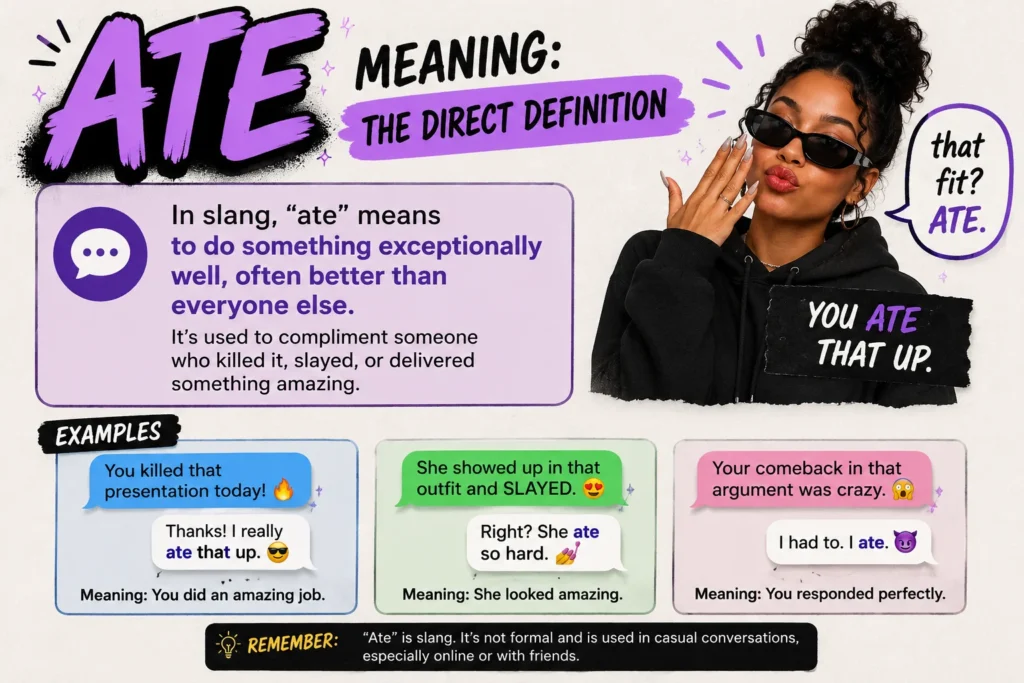
Ate Meaning: The Direct Definition
At its core, ate meaning in slang describes total success or excellence. If a singer nails a difficult note, fans might comment “she ate that.” If a friend shows up in an incredible outfit, someone might say “you ate this look.” The word signals genuine admiration, usually for something performed with skill, confidence, or style, and that admiration is really the emotional core of ate meaning across every context it shows up in.
Unlike its literal meaning — the past tense of “eat” — this slang usage has nothing to do with food at all. Context almost always makes the intended meaning obvious, since the slang version is typically directed at a person’s performance, appearance, or achievement rather than a meal.
It’s also worth noting that ate meaning works as a complete sentence on its own. Someone can simply comment “ATE” under a photo or video, with no additional words needed, and the compliment still lands clearly for anyone familiar with the slang.
Origin of “Ate” as Slang
This slang usage is widely associated with ballroom and drag culture, communities with deep, historic ties to Black and queer creativity and language innovation, where phrases praising exceptional performance have long been part of the culture’s vocabulary. Over time, this usage spread into broader internet slang and mainstream pop culture, particularly through social media.
Because slang origins are often difficult to trace with full precision, and because language moves informally through communities before it’s ever documented, the exact timeline and pathway of “ate” entering wider mainstream use should be treated as a general pattern rather than a firmly established history. What’s clear is that the term’s roots deserve real acknowledgment rather than being treated as a spontaneous internet invention with no cultural lineage.
Why Crediting the Origins of Ate Matters
Understanding ate meaning fully means recognizing that the phrase didn’t appear out of nowhere on a random social media feed. It grew out of a specific community with its own history of language, performance, and creativity, long before mainstream platforms picked it up. Ballroom culture in particular has contributed a long list of words and phrases that eventually became widespread internet slang, often without much public awareness of where they originated.
This pattern isn’t unique to “ate” — many popular slang terms trace back to Black and queer cultural spaces, and losing sight of that origin can flatten the word into something that feels culturally weightless, even though its roots are very real. Using the term casually isn’t inherently disrespectful, but understanding ate meaning fully includes understanding where it came from, not just how to use it correctly in a sentence.
How Ate Became Mainstream Slang
Like many terms with roots in specific cultural communities, ate meaning spread into broader mainstream use gradually, through a mix of social media, reality television, music, and everyday conversation among people connected to these communities and beyond. Once a term gains traction on widely used platforms, it tends to spread quickly, often reaching audiences far removed from its original context within a short period of time.
Because tracking the exact spread of internet slang is notoriously difficult — there’s rarely a single clear starting point that gets documented in real time — any detailed claim about precisely when or how “ate” crossed into mainstream use should be treated as an approximate pattern rather than a precisely dated history.
Ate in Music and Performance Culture
Performance-based communities were among the earliest and most consistent users of this slang, and ate meaning still feels especially natural in this context. A singer nailing a difficult run, a dancer executing a routine flawlessly, or a performer commanding a stage with confidence are all classic situations where fans or fellow performers might say someone “ate” — a direct, high-energy application of ate meaning at its most natural.
This usage reflects the term’s roots in competitive, performance-focused spaces, where quick, expressive praise carries real social value. Even as the slang has spread far beyond these communities, this performance-focused usage remains one of the clearest, most natural applications of the word.
Ate in Fashion and Beauty Commentary
Fashion and beauty spaces have also embraced ate meaning enthusiastically, particularly around red carpet looks, makeup transformations, and standout outfits. Comment sections under fashion posts frequently include phrases like “she ate this look” or simply “ATE,” reflecting genuine admiration for a bold or well-executed style choice.
This context highlights the flexible, visual nature of the slang — it works just as naturally praising an outfit as it does praising a vocal performance, since the underlying idea of “doing something impressively well” applies broadly across creative and visual achievements alike, which is a big part of why ate meaning has stuck around across so many different corners of the internet.
Ate as a Sincere Compliment: Tone Matters
Part of understanding ate meaning fully involves recognizing how consistently sincere the term tends to be. Unlike sarcastic slang that flips meaning based on tone or punctuation, “ate” is almost always intended as genuine, enthusiastic praise. This sincerity is part of why the term has remained popular — it offers a quick, unambiguous way to express real admiration without needing a longer explanation.
That said, tone and context still matter somewhat. Excessive or exaggerated use in a clearly joking context can sometimes carry a lighter, more playful tone rather than serious praise, though this shift is more about surrounding context than any built-in sarcasm within the word itself.
Ate in Sports and Everyday Competition
While the slang’s strongest roots remain in performance and fashion spaces, ate meaning has also found its way into sports commentary and everyday competitive situations. A basketball fan might say a player “ate” during a standout game, or a coworker might jokingly say someone “ate” a difficult presentation at work. This crossover shows how naturally the phrase adapts to any situation involving visible skill or standout performance, even outside its original context — further proof of how widely ate meaning has traveled since its earlier, more specific roots.
Because slang usage across specific communities like sports fandoms can vary and shift quickly, general claims about how common this crossover use is in any particular space should be treated as an observed pattern rather than a precisely measured trend.
Similar Slang With Cultural Roots That Went Mainstream
“Ate” isn’t the only slang term with roots in ballroom, drag, or broader Black cultural spaces that eventually spread into mainstream internet use. Words like “slay,” “shade,” and “read” all followed a somewhat similar path, starting within specific communities before becoming widely used across social media and everyday conversation.
Recognizing this pattern helps put ate meaning into a broader context: it’s part of a long, ongoing tradition of language innovation that regularly reshapes mainstream English, even when the original source of a specific word or phrase isn’t always widely known or credited by everyone using it.
How to Respond When Someone Uses Ate on You
Understanding ate meaning also means knowing how to react gracefully when someone directs it at you. A simple thank-you, a laughing emoji, or playing along with the enthusiasm usually fits the tone best, since the comment is meant to celebrate a moment rather than start an extended conversation. Overexplaining or downplaying the compliment can sometimes feel like brushing off genuine praise, even though that’s rarely the intention behind doing so.
For people newer to the term, receiving it for the first time can feel a little confusing, especially if they’re not sure whether “ate” is a typo or a compliment. Once the slang meaning clicks, though, most people quickly pick up on the celebratory tone and start recognizing it easily in future comments and captions.
“Ate and Left No Crumbs”: The Extended Phrase
Understanding ate meaning fully often means understanding its most common extended version: “ate and left no crumbs.” This fuller phrase emphasizes that someone didn’t just do well — they did so completely and flawlessly, leaving no room for criticism or doubt, much like someone who finished a meal so thoroughly that not a single crumb remains.
This extended phrase carries slightly more intensity than “ate” alone, often reserved for truly standout moments rather than everyday competence. Both versions point toward the same core idea, just with different levels of emphasis, which is worth keeping in mind when deciding how enthusiastically to apply ate meaning to a given moment.
How People Use Ate in Texting and Social Media
The slang use of “ate” shows up constantly in texting and social media captions, comments, and video reactions. Someone might comment “you ATE this” under a photo, or a fan account might caption a performance clip with “she really ate.” The word is often capitalized or paired with emphasis, like extra letters or emojis, to convey excitement.
This usage tends to stay positive and celebratory rather than sarcastic, which sets it apart from some other slang terms that can flip meaning depending on tone. Understanding ate meaning in this context mostly comes down to recognizing genuine enthusiasm rather than searching for hidden sarcasm. Scrolling through comment sections on performance or fashion posts is often the fastest way to see this pattern play out in real time.
Ate Meaning in Different Everyday Contexts
While the slang started in performance-focused spaces, ate meaning has expanded to cover a wide range of achievements. In fashion, someone might say a person “ate” a runway look or an outfit. In music or dance, a performer might be said to have “ate” a routine or vocal run. In everyday life, the word can even apply to smaller wins, like nailing a presentation at work or acing a difficult exam.
Example: “She walked into that interview and ate — they offered her the job on the spot.”
This flexibility is part of why the slang has stayed popular; it can scale from major public performances down to small personal victories without losing its celebratory tone. Applying ate meaning to smaller, everyday wins is one of the clearest signs of how far the term has traveled from its original, more performance-specific context.
Is the Ate Meaning Ever Offensive?
No. Ate meaning in its slang sense carries an entirely positive, complimentary tone. It’s not considered rude or offensive when used as intended, and it functions purely as praise rather than criticism or insult.
That said, because the term comes from a specific cultural context, it’s worth using it with some awareness of that origin rather than treating it as meaningless internet noise. Using slang respectfully, with some recognition of where it comes from, is generally seen as more thoughtful than using it without any awareness of its roots at all. Being offensive isn’t really the concern with ate meaning — being thoughtlessly disconnected from its history is the more relevant consideration.
Ate vs. Similar Slang Terms
Several other slang terms overlap with ate meaning, though each carries a slightly different flavor. “Slayed” carries a very similar meaning, emphasizing that someone performed with confidence and skill. “Killed it” is a slightly more mainstream, less culturally specific alternative with a similar celebratory tone. “Popped off” often emphasizes a sudden, impressive burst of excellence, sometimes with more energy or intensity than “ate” alone.
“Ate it up” is a related but slightly different phrase, sometimes used to describe an audience’s enthusiastic reaction to a performance rather than describing the performer’s execution directly. Recognizing these small distinctions helps clarify exactly what ate meaning covers compared to its closest slang neighbors.
The Unusual Grammar Behind Ate as Slang
One quirky detail about ate meaning as slang involves grammar. Even though “ate” is technically the past tense of “eat,” people use it this way regardless of actual timing — “she’s eating this performance” or “she ate this performance” can both be used to praise something happening in the present moment. This flexible, almost timeless use of the past tense is common in internet slang more broadly, where grammatical “correctness” often takes a back seat to tone and emphasis.
This is part of why the slang can feel a little unusual to people encountering it for the first time, since the tense doesn’t map onto standard grammar rules the way “ate” normally would in a literal sentence about food. This grammatical quirk is actually one of the more reliable signals that ate meaning is in play rather than the literal past tense of eating.
Common Misunderstandings About Ate
One common misunderstanding, especially for people encountering the term for the first time, is assuming a sentence like “she ate” is simply describing a meal. Context almost always resolves this quickly — a sentence about eating usually includes food-related details, while the slang version typically appears alongside a performance, outfit, or achievement instead. This contrast is really the simplest test for spotting ate meaning in the wild: look at what surrounds the word, not the word itself.
Another misunderstanding assumes the slang is brand new or invented entirely by a specific platform or influencer. In reality, the phrase has meaningful roots in earlier community language, and its recent spread through social media represents amplification of existing slang rather than a completely new invention starting from nothing.
A third misunderstanding treats the term as sarcastic or backhanded. Unlike some slang that can flip between genuine praise and mockery depending on tone, “ate” in its standard slang usage is almost always sincere, enthusiastic praise rather than a hidden insult. Keeping this in mind helps prevent misreading a genuine compliment as something more ambiguous than it actually is.
Ate Across Different Platforms
The slang use of “ate” appears across many major social platforms, particularly in comment sections responding to performances, fashion posts, or impressive personal achievements. It’s especially common in spaces built around music, dance, fashion, and reality TV commentary, where quick, expressive praise fits naturally into fast-moving conversation threads.
Because platform popularity and usage patterns shift constantly, specific claims about which platform uses the term most heavily should be treated as a general impression rather than a precisely measured statistic. Regardless of the exact platform breakdown, ate meaning clearly thrives anywhere fast, expressive commentary is part of the culture.
Regional and Generational Differences in Use
Like most contemporary slang, ate meaning tends to be most familiar to younger internet users, particularly those active on platforms where the term circulates heavily in comments and captions. Older or less terminally online audiences may encounter the term less often, or may need brief context the first few times they see it used.
Because slang popularity shifts over time and varies by community, general claims about which age groups use the term most should be treated as broad tendencies rather than precise, measurable data. Still, this generational pattern is a normal part of how ate meaning, like most slang, spreads unevenly across different audiences before eventually becoming more broadly familiar.
Frequently Asked Questions
What does ate mean in slang?
Ate meaning in slang describes doing something exceptionally well — a performance, an outfit, or an achievement — rather than literally eating food.
Where did the slang meaning of ate come from?
It’s widely associated with ballroom and drag culture, communities with deep roots in Black and queer creativity, before spreading into broader internet slang.
Is ate the same as slayed?
They’re very similar and often used interchangeably, both expressing strong praise for confidence and skill in a performance or moment.
Is it rude to say someone ate?
No. It’s a compliment, not an insult, and is almost always used sincerely rather than sarcastically.
Why do people say “ate” instead of “is eating” or “eats”?
The slang usage doesn’t follow standard grammar tense rules, often applying “ate” regardless of whether the moment being praised is happening now or already finished.
What does “left no crumbs” add to the phrase?
It emphasizes that the performance or achievement was so complete and flawless that there’s nothing left to criticize, adding extra intensity to the praise.
Can ate be used for everyday achievements, not just performances?
Yes. While ate meaning started in performance-focused spaces, it now comfortably applies to everyday wins too, like a great presentation or a well-handled conversation.
Is it okay for anyone to use the slang, regardless of background?
Most people use the slang casually across many backgrounds, though understanding and respecting its cultural roots is generally seen as a thoughtful way to use it.
Conclusion
Ate meaning, at its heart, is about excellence — a short, punchy way to celebrate someone doing something impressively well, whether that’s a performance, an outfit, or a personal achievement. Rooted in ballroom and drag culture before spreading widely online, the word carries real cultural history behind its current status as one of the internet’s favorite compliments, and remembering that history is part of using the word well.